platinumseeds.in

Abhishek

Hybrid Bajra Seed Varieties

Hybrid Bajra Seed Varieties: Choosing the Right Bajra Hybrid for Better Yield

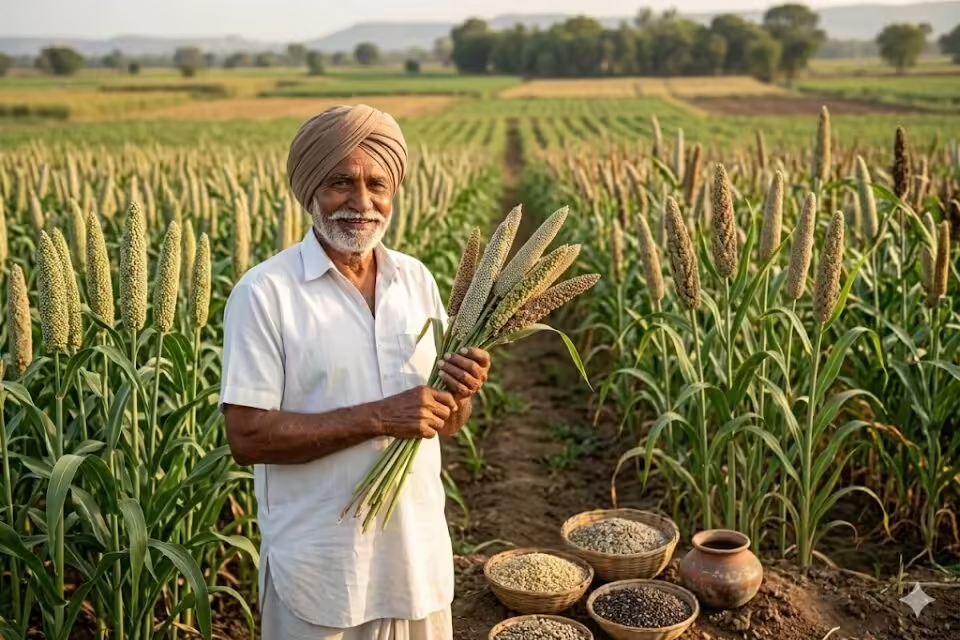
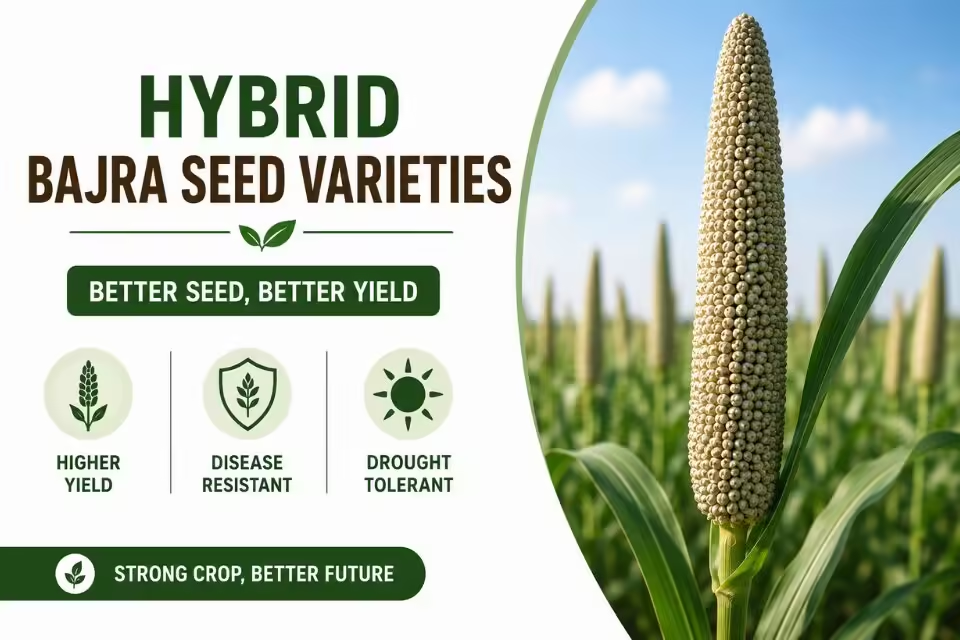
Bajra (Pearl Millet) is one of India’s most important cereal crops, known for its drought tolerance, nutritional value, and adaptability to challenging farming conditions. To achieve higher productivity and better returns, farmers are increasingly choosing Hybrid Bajra Seed Varieties that offer improved performance and reliability.At Platinum Seeds, we have been committed to empowering farmers with quality seeds for 19+ years, helping them maximize yields through innovative seed technology and continuous agricultural support. Know more about the seeds Why Choose Hybrid Bajra Seed Varieties? Hybrid Bajra seeds are developed to provide several advantages over traditional varieties: Higher grain yield potential Better adaptability to diverse climatic conditions Improved drought tolerance Uniform crop growth and maturity Better grain quality Enhanced disease resistance Selecting the right hybrid can significantly improve farm profitability while reducing production risks. You can also read : Hybrid Bajra vs Desi Bajra in India: Which Seed Is Right for Your Farm? 1. Bajra Hybrid PS 88 Buy now Bajra Hybrid PS 88 is a high-performing pearl millet hybrid designed for farmers seeking stable yields and strong crop vigor. Key Properties of Seeds : ✔ High yield potential ✔ Excellent plant vigor ✔ Uniform ear head development ✔ Suitable for multiple growing regions ✔ Better adaptability under varying conditions Benefits for Farmers: Consistent crop performance Strong growth from early stages Better grain formation Suitable for commercial cultivation 2. F1 Hybrid Bajra Tiger – 75 BUY NOW F1 Hybrid Bajra Tiger – 75 is a high-performing hybrid variety developed for strong crop growth, better grain formation, and dependable field performance under diverse farming conditions. Key Properties of Seeds :  ✔ Vigorous plant growth ✔ Good grain filling capacity ✔ Strong crop standability ✔ Uniform ear head development ✔ Consistent field performance Benefits for Farmers: • Higher yield potential • Better crop uniformity • Improved field management • Suitable for various growing conditions 2. F1 Hybrid Bajra Tiger – 75 BUY NOW F1 Hybrid Bajra Tiger – 75 is a high-performing hybrid variety developed for strong crop growth, better grain formation, and dependable field performance under diverse farming conditions. Key Properties of Seeds :  ✔ Vigorous plant growth ✔ Good grain filling capacity ✔ Strong crop standability ✔ Uniform ear head development ✔ Consistent field performance Benefits for Farmers: • Higher yield potential • Better crop uniformity • Improved field management • Suitable for various growing conditions 3. F1 Hybrid Bajra PS-90 buy now F1 Hybrid Bajra PS-90 is a premium hybrid variety recognized for its strong growth, excellent crop stand, and consistent yield performance across diverse farming conditions. Key Features: ✔ Vigorous plant growth and development ✔ High grain yield potential ✔ Uniform and compact ear head formation ✔ Good tolerance to varying climatic conditions ✔ Reliable field performance Benefits for Farmers: Higher productivity and better returns • Improved crop uniformity • Easier crop management and harvesting • Suitable for different soil types • Consistent performance throughout the growing season 4. F1 Hybrid Bajra Virat 94 Buy now F1 Hybrid Bajra Virat 94 is an advanced hybrid variety known for its vigorous growth, strong crop establishment, and dependable yield performance. Key Properties of Seeds : ✔ Robust plant vigor ✔ High grain productivity potential ✔ Uniform ear head formation ✔ Good environmental adaptability ✔ Strong field performance Benefits for Farmers: • Better harvest opportunities • Improved crop uniformity • Efficient farm management • Adaptable to different cultivation conditions 5. F1 Hybrid Bajra Pushpa Super – 27 Buy Now F1 Hybrid Bajra Pushpa Super – 27 is a quality hybrid developed to deliver healthy crop growth, excellent field establishment, and enhanced productivity potential. Key Properties of Seeds : ✔ Vigorous plant development ✔ Good grain quality potential ✔ Uniform crop stand ✔ Reliable adaptability in different conditions ✔ Consistent field performance Benefits for Farmers: • Enhanced yield opportunities • Better crop management efficiency • Improved crop uniformity • Suitable for commercial cultivation practices Why Farmers Trust Platinum Seeds For more than 19 years, Platinum Seeds has focused on delivering quality seed solutions that help farmers achieve sustainable growth and profitability. Our Strengths: 19+ Years of Agricultural Expertise Quality-Assured Seed Production Farmer-Centric Research & Development Wide Distribution Network Commitment to Crop Performance Trusted by Farmers Across Regions Our mission is to provide innovative seed solutions that contribute to better harvests and stronger farming communities. You can aslo read : Complete Guide to Hybrid Bajra Farming in India (2026) — From Sowing to Harvesting For more than 19 years, Platinum Seeds has focused on delivering quality seed solutions that help farmers achieve sustainable growth and profitability. Our Strengths: 19+ Years of Agricultural Expertise Quality-Assured Seed Production Farmer-Centric Research & Development Wide Distribution Network Commitment to Crop Performance Trusted by Farmers Across Regions Our mission is to provide innovative seed solutions that contribute to better harvests and stronger farming communities. You can aslo read : Complete Guide to Hybrid Bajra Farming in India (2026) — From Sowing to Harvesting For more than 19 years, Platinum Seeds has focused on delivering quality seed solutions that help farmers achieve sustainable growth and profitability. Our Strengths: 19+ Years of Agricultural Expertise Quality-Assured Seed Production Farmer-Centric Research & Development Wide Distribution Network Commitment to Crop Performance Trusted by Farmers Across Regions Our mission is to provide innovative seed solutions that contribute to better harvests and stronger farming communities. You can aslo read : Complete Guide to Hybrid Bajra Farming in India (2026) — From Sowing to Harvesting For more than 19 years, Platinum Seeds has focused on delivering quality seed solutions that help farmers achieve sustainable growth and profitability. Our Strengths: 19+ Years of Agricultural Expertise Quality-Assured Seed Production Farmer-Centric Research & Development Wide Distribution Network Commitment to Crop Performance Trusted by Farmers Across Regions Our mission is to provide innovative seed solutions that contribute to better harvests and stronger farming communities. You can aslo read : Complete Guide to Hybrid Bajra Farming in India (2026) — From Sowing to Harvesting Best Practices for Successful Bajra Cultivation To maximize

Hybrid Bajra Seed Varieties: Choosing the Right Bajra Hybrid for Better Yield Read More »

bajra sowing time in India

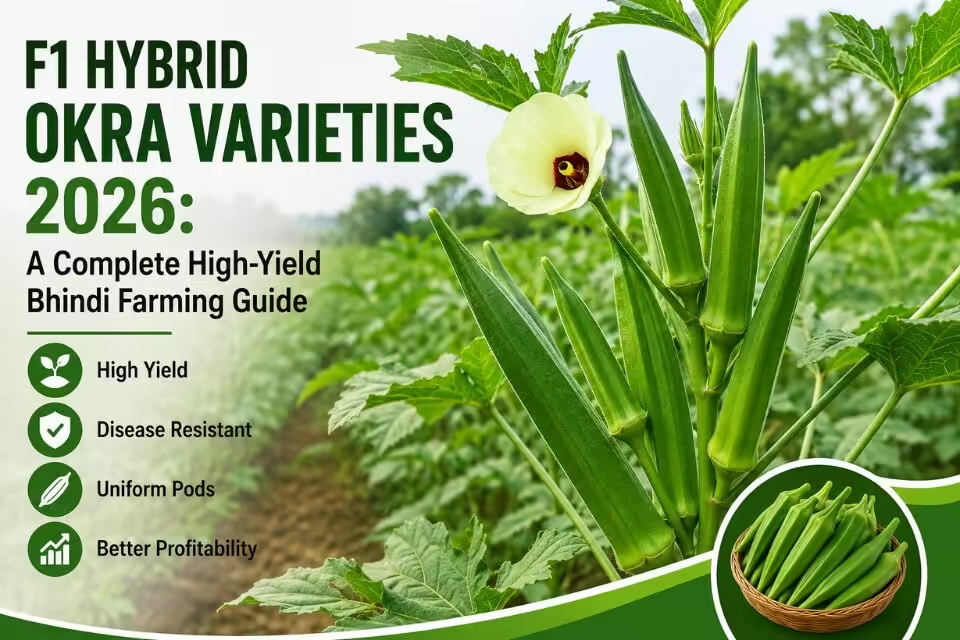
Case Study: How Platinum Seeds Helped a Farmer Increase Yield with F1 Hybrid Okra Seeds

Okra cultivation has become one of the most profitable vegetable farming businesses in India. However many farmers still face challenges such as low germination poor fruit quality pest attacks and inconsistent yields. Choosing the right seed variety is often the difference between profit and loss. This case study highlights how Platinum Seeds helped a farmer improve productivity and profitability through the adoption of its F1 Hybrid Okra Seeds. The story demonstrates the practical impact of quality hybrid seeds on commercial farming. Farmer Profile Farmer Name: Rajesh KumarLocation: Karnal HaryanaFarm Size: 4 AcresCrop: Okra (Bhindi)Farming Experience: 12 Years Rajesh Kumar had been cultivating traditional okra varieties for several years. Although he had experience in vegetable farming his farm was facing declining productivity due to inconsistent plant growth and market quality issues. Challenges Faced by the Farmer Before switching to Platinum Seeds the farmer encountered several problems: Poor Germination Rate The locally sourced seeds showed uneven germination which resulted in irregular plant population across the field. Lower Yield Traditional varieties produced fewer fruits per plant leading to reduced overall productivity. Market Rejection Many harvested fruits lacked uniform size and color which affected market demand and selling price. Disease Pressure The crop was frequently affected by common field diseases which impacted plant health and production. Reduced Profitability Rising input costs combined with lower yields reduced the overall profit from okra cultivation. The Platinum Seeds Solution After consulting with local agricultural experts the farmer decided to try Platinum Seeds F1 Hybrid Okra Seeds. The primary reasons for choosing Platinum Seeds included: High genetic purity Strong germination performance Uniform fruit quality Better adaptability to Indian farming conditions Potential for higher yields Improved market acceptance The farmer allocated 4 acres of land for cultivation using Platinum Seeds hybrid okra variety. Crop Management Practices To maximize performance the following farming practices were implemented: Land Preparation The field was properly ploughed and leveled to ensure ideal soil conditions. Seed Sowing The seeds were sown according to recommended spacing guidelines to promote healthy plant development. Nutrient Management Balanced fertilizers were applied based on soil requirements and crop growth stages. Irrigation Regular irrigation schedules were maintained to ensure optimum moisture availability. Pest and Disease Monitoring Timely monitoring and preventive measures helped maintain crop health throughout the growing season. Results Achieved The performance of Platinum Seeds F1 Hybrid Okra Seeds exceeded the farmer’s expectations. Excellent Germination The seeds demonstrated strong and uniform germination resulting in a healthy crop stand. Result: More uniform plant population Better field coverage Reduced seed wastage Vigorous Plant Growth The crop showed excellent vegetative growth with strong stems and healthy foliage. Result: Better crop establishment Improved flowering potential Enhanced fruit setting Higher Fruit Production The plants produced a large number of marketable fruits throughout the harvesting period. Result: Increased yield per acre More harvesting cycles Better farm productivity Uniform Fruit Quality The harvested okra fruits had attractive color consistent shape and desirable size. Result: Better market demand Reduced sorting losses Higher selling prices Improved Disease Tolerance The crop maintained good health during the growing season which helped sustain production. Result: Lower crop losses Reduced stress on plants Better overall field performance Yield Comparison Parameter Previous Variety Platinum Seeds F1 Hybrid Okra Seeds Germination Rate 75% 95% Average Yield 75 Quintals/Acre 115 Quintals/Acre Marketable Produce 80% 95% Average Selling Price Standard Market Rate Premium Market Rate Net Profit Moderate Significantly Higher Results may vary depending on location climate soil conditions and crop management practices. Economic Impact The adoption of Platinum Seeds hybrid okra seeds created a positive financial impact for the farmer. Benefits Observed Higher yield per acre Better fruit quality Increased market acceptance Improved income generation Strong return on investment The farmer reported a substantial increase in profitability compared to previous seasons. Farmer Feedback “I was looking for a reliable okra seed variety that could provide better yield and quality. After using Platinum Seeds F1 Hybrid Okra Seeds I noticed excellent germination strong plant growth and higher market demand for my produce. The results were better than my previous varieties and I plan to continue using Platinum Seeds in future seasons.” – Rajesh Kumar, Farmer from Karnal Haryana Why Farmers Choose Platinum Seeds F1 Hybrid Okra Seeds Platinum Seeds focuses on developing high-performance hybrid vegetable seeds suitable for modern farming needs. Key Advantages High yield potential Uniform fruit size and appearance Strong plant vigor Better field performance Consistent crop quality Suitable for commercial cultivation Higher profitability opportunities Conclusion This case study demonstrates how Platinum Seeds F1 Hybrid Okra Seeds helped a farmer overcome productivity challenges and achieve better returns from okra cultivation. Through improved germination vigorous growth superior fruit quality and higher yields the farmer was able to enhance both production and profitability. For farmers seeking dependable and high-performing F1 Hybrid Okra Seeds Platinum Seeds continues to provide solutions that support sustainable and profitable vegetable farming. Explore Platinum Seeds F1 Hybrid Okra Seeds:https://platinumseeds.in/product-category/f1-hybrid-okra-seeds/

Case Study: How Platinum Seeds Helped a Farmer Increase Yield with F1 Hybrid Okra Seeds Read More »

bajra sowing time in India

भारत में बाजरा बुवाई का समय 2026: राजस्थान, हरियाणा, उत्तर प्रदेश और गुजरात के लिए राज्यवार कैलेंडर

  भारत में सफल बाजरा खेती के लिए सही समय पर बुवाई करना सबसे महत्वपूर्ण कारकों में से एक है। यदि उच्च गुणवत्ता वाले बीज भी गलत समय पर बोए जाएं या मौसम अनुकूल न हो, तो उनकी उत्पादकता प्रभावित हो सकती है। बदलते जलवायु पैटर्न, मानसून में देरी और बढ़ते तापमान को देखते हुए किसानों को वर्ष 2026 में बाजरा की खेती की बेहतर योजना बनानी होगी। अपने राज्य के अनुसार सही बुवाई समय जानकर किसान निम्न लाभ प्राप्त कर सकते हैं: बेहतर अंकुरण प्रतिशत पौधों की मजबूत वृद्धि दानों का अच्छा विकास सूखा सहनशीलता में वृद्धि अधिक उपज और बेहतर लाभ चाहे आप राजस्थान के शुष्क क्षेत्रों में खेती करते हों, हरियाणा के सिंचित क्षेत्रों में या फिर गुजरात और उत्तर प्रदेश की मिश्रित कृषि प्रणाली में, यह विस्तृत मार्गदर्शिका आपको भारत में बाजरा बुवाई का सही समय समझने में मदद करेगी। Know more about the seeds 2026 में सही समय पर बाजरा बुवाई क्यों महत्वपूर्ण है? भारत विश्व का सबसे बड़ा बाजरा उत्पादक देश है और स्वास्थ्य के प्रति बढ़ती जागरूकता तथा सरकारी प्रोत्साहन के कारण इसकी मांग लगातार बढ़ रही है। कृषि रिपोर्टों के अनुसार: भारत में प्रतिवर्ष 18 मिलियन टन से अधिक बाजरा उत्पादन होता है। राजस्थान अकेले लगभग 40% बाजरा उत्पादन में योगदान देता है। “श्री अन्न” अभियान के तहत बाजरा उत्पादन को विशेष बढ़ावा दिया जा रहा है। 2026-27 के कृषि बजट में जलवायु-अनुकूल फसलों और आधुनिक बीज तकनीकों को प्रोत्साहित किया गया है। सही समय पर बुवाई करने वाले किसानों को अक्सर निम्न लाभ मिलते हैं: ✅ बेहतर अंकुरण ✅ मजबूत जड़ विकास ✅ कीट एवं रोगों का कम प्रकोप ✅ अधिक दाना वजन ✅ बेहतर बाजार मूल्य भारत में बाजरा बुवाई का समय 2026 (राज्यवार कैलेंडर) राज्य खरीफ बुवाई का समय ग्रीष्म/रबी बुवाई आदर्श तापमान राजस्थान 15 जून – 15 जुलाई सीमित रूप से नवंबर 28°C – 35°C हरियाणा 1 जुलाई – 25 जुलाई फरवरी – मार्च 25°C – 32°C उत्तर प्रदेश 25 जून – 20 जुलाई फरवरी – मार्च 26°C – 34°C गुजरात 15 जून – 10 जुलाई जनवरी – फरवरी 25°C – 35°C महाराष्ट्र 1 जून – 15 जुलाई अक्टूबर – नवंबर 24°C – 33°C यह समय-सारिणी किसानों को नमी की उपलब्धता बनाए रखने और फसल को फूल एवं दाना बनने की अवस्था में तनाव से बचाने में मदद करती है। राज्यवार बाजरा बुवाई मार्गदर्शिका 1. राजस्थान: भारत का प्रमुख बाजरा उत्पादक राज्य राजस्थान में रेतीली मिट्टी और कम वर्षा वाले क्षेत्र बाजरा उत्पादन के लिए अत्यंत उपयुक्त हैं। आदर्श बुवाई समय जून के मध्य से जुलाई के प्रारंभ तक पहली अच्छी मानसूनी वर्षा के तुरंत बाद सही समय का महत्व देर से बुवाई करने पर: फूल आने के समय गर्मी का तनाव बढ़ सकता है। दाना भरने के दौरान नमी की कमी हो सकती है। दानों का आकार और उत्पादन कम हो सकता है। विशेषज्ञ सलाह बेहतर उपज के लिए जुलाई के पहले सप्ताह तक बुवाई पूरी कर लें। 2. हरियाणा और पंजाब: ग्रीष्मकालीन बाजरा की बढ़ती लोकप्रियता हरियाणा में किसान अब बड़े स्तर पर: ग्रीष्मकालीन (ज़ायद) बाजरा सिंचित हाइब्रिड बाजरा की खेती कर रहे हैं। खरीफ बुवाई समय 1 जुलाई से 25 जुलाई ग्रीष्मकालीन बुवाई समय फरवरी से मार्च लाभ कीटों का कम प्रकोप बेहतर गुणवत्ता वाला अनाज अच्छा बाजार मूल्य 3. उत्तर प्रदेश: खरीफ और ग्रीष्मकालीन दोनों मौसम के लिए उपयुक्त उत्तर प्रदेश के किसान अधिक उत्पादन के लिए हाइब्रिड बाजरा बीजों को प्राथमिकता दे रहे हैं। अनुशंसित बुवाई समय 25 जून से 20 जुलाई ग्रीष्मकालीन खेती फरवरी से मार्च (सिंचाई उपलब्ध होने पर) सही समय पर बुवाई के लाभ जलभराव से बचाव शुरुआती सूखे के प्रभाव में कमी फूल आने के समय गर्मी से सुरक्षा 4. गुजरात: ग्रीष्मकालीन बाजरा उत्पादन का प्रमुख केंद्र गुजरात के किसान तेजी से: हाइब्रिड बाजरा उच्च घनत्व वाली खेती तकनीकों को अपना रहे हैं। खरीफ बुवाई समय 15 जून से 10 जुलाई ग्रीष्मकालीन बुवाई जनवरी से फरवरी लाभ स्वच्छ और उच्च गुणवत्ता वाले दाने फफूंदजनित रोगों का कम खतरा निर्यात गुणवत्ता की फसल 5. महाराष्ट्र: विस्तारित खेती के अवसर महाराष्ट्र में किसान: वर्षा आधारित बाजरा सीमित रबी बाजरा दोनों की खेती करते हैं। अनुशंसित समय खरीफ: जून से मध्य जुलाई रबी: अक्टूबर से नवंबर जलवायु परिवर्तन का बाजरा बुवाई समय पर प्रभाव बदलती जलवायु परिस्थितियां पारंपरिक कृषि कैलेंडर को प्रभावित कर रही हैं। मुख्य चुनौतियां: मानसून में देरी अचानक भारी वर्षा 40°C से अधिक तापमान फूल आने के समय नमी की कमी इसी कारण आधुनिक हाइब्रिड बाजरा बीजों का महत्व बढ़ गया है। आधुनिक हाइब्रिड बीजों की विशेषताएं सूखा सहनशीलता कम अवधि में पकने की क्षमता गर्मी प्रतिरोध तनाव से उबरने की बेहतर क्षमता बाजरा बुवाई के लिए उपयुक्त मिट्टी और परिस्थितियां बेहतर अंकुरण के लिए: मिट्टी का तापमान 22°C से अधिक होना चाहिए। अच्छी जल निकासी वाली बलुई दोमट मिट्टी सर्वोत्तम रहती है। जलभराव वाले खेतों से बचें। उपयुक्त pH स्तर 6.0 से 7.5 बीज बुवाई की गहराई सूखी मिट्टी: 3–4 सेमी नम मिट्टी: 1.5–2.5 सेमी सही गहराई पर बुवाई से: जड़ें मजबूत बनती हैं पौधों की संख्या समान रहती है अंकुरण तेज होता है 2026 में किसान हाइब्रिड बाजरा बीज क्यों पसंद कर रहे हैं? आधुनिक किसान हाइब्रिड बाजरा बीजों को इसलिए पसंद करते हैं क्योंकि इनमें: ✅ अधिक उत्पादन क्षमता ✅ एकसमान परिपक्वता ✅ रोग प्रतिरोधक क्षमता ✅ बेहतर सूखा सहनशीलता ✅ बाजार में अधिक मांग उचित प्रबंधन के साथ कई हाइब्रिड किस्में 18–30 क्विंटल प्रति हेक्टेयर तक उत्पादन दे सकती हैं। बाजरा खेती के लिए प्लेटिनम सीड्स क्यों चुनें? Platinum Seeds भारत की एक अग्रणी बीज कंपनी है जो आधुनिक कृषि के लिए उच्च गुणवत्ता वाले OP और F1 हाइब्रिड बीज उपलब्ध कराती है। कंपनी का मुख्य फोकस: उच्च अंकुरण क्षमता वाले बीज जलवायु-अनुकूल हाइब्रिड बेहतर खेत प्रदर्शन रोग प्रतिरोधक किस्में किसानों की आय में वृद्धि Platinum Seeds के उत्पाद हाइब्रिड बाजरा बीज OP बाजरा बीज चारा बीज सब्जी बीज अन्य फसल बीज किसान Platinum Seeds पर भरोसा क्यों करते हैं? विश्वसनीय गुणवत्ता मजबूत बीज शक्ति लगातार अच्छा प्रदर्शन आधुनिक कृषि अनुसंधान प्रीमियम बाजरा बीज देखें: https://platinumseeds.in/product-category/pearl-millet/ सही समय पर बाजरा बुवाई के लाभ सही समय पर बुवाई करने से: बेहतर अंकुरण प्राप्त होता है

भारत में बाजरा बुवाई का समय 2026: राजस्थान, हरियाणा, उत्तर प्रदेश और गुजरात के लिए राज्यवार कैलेंडर Read More »

bajra sowing time in India

State-Wise Bajra Sowing Time in India Calendar 2026: Best Dates for Rajasthan, Haryana, UP & Gujarat

In Indian farming, choosing the correct Bajra sowing time in India is one of the biggest factors that determines crop success. Even the best-quality seeds cannot perform well if sowing is delayed or done in unsuitable weather conditions. With changing climate patterns, delayed monsoons, and rising temperatures, farmers in 2026 must plan their pearl millet cultivation more strategically than ever before. Understanding the ideal sowing window for your state can help improve: Germination percentage Plant vigor Grain filling Drought tolerance Overall yield and profitability Whether you cultivate pearl millet in the dry regions of Rajasthan, the irrigated fields of Haryana, or the mixed farming systems of Gujarat and Uttar Pradesh, this detailed guide will help you understand the ideal Bajra sowing time in India for maximum productivity. Know more about the seeds Why Correct Bajra Sowing Time in India Matters in 2026 India is the world’s largest producer of pearl millet (Bajra), and demand for millets continues to grow rapidly due to increasing health awareness and government support. According to agricultural reports: India produces over 18 million tonnes of millets annually Rajasthan alone contributes around 40% of total Bajra production The Government of India has significantly increased millet promotion under the “Shree Anna” mission The 2026–27 agriculture budget crossed ₹1.30 lakh crore, supporting climate-resilient crops and modern seed technologies Because of erratic rainfall and rising heat stress, timely sowing has become more important than ever. Farmers who follow the correct Bajra sowing schedule often achieve: ✅ Better germination ✅ Strong root development ✅ Reduced pest pressure ✅ Higher grain weight ✅ Better market prices You can also read : Hybrid Bajra vs Desi Bajra in India: Which Seed Is Right for Your Farm? Best Bajra Sowing Time in India (State-Wise Calendar 2026) The ideal sowing period depends on monsoon arrival, soil moisture, irrigation availability, and temperature. State Kharif Sowing Time Summer/Rabi Window Ideal Temperature Rajasthan June 15 – July 15 November (limited) 28°C – 35°C Haryana July 01 – July 25 February – March 25°C – 32°C Uttar Pradesh June 25 – July 20 February – March 26°C – 34°C Gujarat June 15 – July 10 January – February 25°C – 35°C Maharashtra June 01 – July 15 October – November 24°C – 33°C This schedule helps farmers optimize moisture availability and avoid crop stress during flowering and grain formation. Regional Guide for Bajra Sowing Time in India 1. Rajasthan: India’s Bajra Hub Rajasthan is India’s leading Bajra-producing state because pearl millet performs exceptionally well in sandy soils and low-rainfall areas. Ideal Sowing Time Mid-June to early July Immediately after first effective monsoon showers Why Timing Matters Late sowing may expose the crop to: Heat stress during flowering Moisture shortage during grain filling Lower grain size and yield Best Practice Farmers should complete sowing before the first week of July for better productivity. 2. Haryana & Punjab: Shift Toward Summer Bajra Many farmers in Haryana now cultivate: Summer Bajra (Zaid season) Irrigated pearl millet hybrids Ideal Kharif Window July 1 to July 25 Summer Bajra Window February to March Summer cultivation offers: Lower pest infestation Better grain quality Improved market rates 3. Uttar Pradesh: Balanced Kharif and Summer Cultivation UP farmers increasingly prefer hybrid Bajra due to: Better yield potential Strong market demand Livestock fodder requirements Recommended Sowing Period June 25 to July 20 Summer Crop February to March with irrigation support Proper timing helps avoid: Waterlogging Early drought stress Flowering-stage heat damage 4. Gujarat: High Potential for Summer Bajra Gujarat farmers are adopting: Summer Bajra hybrids High-density sowing methods Ideal Kharif Sowing June 15 to July 10 Summer Bajra January to February Summer Bajra cultivation in Gujarat provides: Cleaner grains Lower fungal disease pressure Better export quality produce 5. Maharashtra: Extended Growing Opportunities Maharashtra supports both: Rainfed Bajra Irrigated Rabi Bajra cultivation Recommended Timing June to mid-July for Kharif October–November for limited Rabi cultivation You can also read : How to Choose the Right Hybrid Bajra Seed India: A Practical Guide for Farmers How Climate Change Is Affecting Bajra Sowing Time in India Climate uncertainty is changing traditional farming calendars across India. Major challenges include: Delayed monsoon Sudden heavy rainfall Heat waves above 40°C Moisture stress during flowering This makes seed quality and sowing timing more important than ever. Modern hybrid Bajra seeds now offer: Drought tolerance Faster maturity Heat resistance Better stress recovery Best Soil Conditions for Bajra Sowing For healthy germination: Soil temperature should remain above 22°C Well-drained sandy loam soils perform best Avoid waterlogged fields Recommended Soil pH 6.0 to 7.5 Seed Depth Dry soil: 3–4 cm Moist soil: 1.5–2.5 cm Correct sowing depth ensures: Better root establishment Uniform crop stand Faster emergence Why Farmers Prefer Hybrid Bajra Seeds in 2026 Modern farmers increasingly prefer hybrid Bajra because of: ✅ Higher grain yield ✅ Uniform maturity ✅ Better disease resistance ✅ Strong drought tolerance ✅ Improved marketability Many hybrid varieties can produce: 18–30 quintals per hectare under proper management You can also read : Complete Guide to Hybrid Bajra Farming in India (2026) — From Sowing to Harvesting Why Choose Platinum Seeds for Bajra Farming? Platinum Seeds is a premium seed company in India offering high-quality OP and F1 hybrid seeds for modern Indian agriculture. The company focuses on: High germination seeds Climate-resilient hybrids Better field performance Disease-resistant genetics Farmer profitability Platinum Seeds Offers: Hybrid Bajra Seeds OP Bajra Seeds Fodder Seeds Vegetable Seeds Field Crop Seeds Farmers trust Platinum Seeds because of: Reliable seed quality Strong seed vigor Consistent crop performance Advanced agricultural research Explore Premium Bajra Seeds Here: https://platinumseeds.in/product-category/pearl-millet/ Benefits of Choosing the Right Bajra Sowing Time Correct sowing timing helps farmers achieve: Better germination rate Uniform crop growth Higher tiller count Strong grain development Reduced irrigation cost Improved market price Even a delay of 10–15 days can significantly reduce yield potential in some regions. contact us for seeds Conclusion Understanding the correct Bajra sowing time in India is essential for maximizing productivity and reducing climate-related risks in 2026. Whether you are cultivating

State-Wise Bajra Sowing Time in India Calendar 2026: Best Dates for Rajasthan, Haryana, UP & Gujarat Read More »

hybrid bajra vs desi bajra in India

Hybrid Bajra vs Desi Bajra in India: Which Seed Is Right for Your Farm?

Choosing between Hybrid Bajra vs Desi Bajra in India is one of the most important decisions farmers make before the Kharif season begins. Bajra (Pearl Millet) is one of India’s most drought-tolerant and profitable cereal crops, especially in states like Rajasthan, Haryana, Gujarat, Uttar Pradesh, and Maharashtra. Today, farmers have two major options — traditional desi bajra seeds and modern hybrid bajra seeds. Both have their own advantages depending on climate conditions, irrigation facilities, soil fertility, and farming goals. If you want higher grain yield and commercial profits, hybrids may be ideal. If you prefer low-input farming, seed saving, and strong fodder quality, desi bajra remains a trusted choice. In this detailed guide, we compare Hybrid Bajra vs Desi Bajra India based on yield, climate resilience, cost, nutrition, fodder quality, and profitability to help you choose the right bajra seed for your farm. You can also read : Complete Guide to Hybrid Bajra Farming in India (2026) — From Sowing to Harvesting    Know More about the seeds What Is Hybrid Bajra? Hybrid bajra seeds are developed by crossing two superior parent lines to create a high-performing crop with better productivity, disease resistance, and uniform growth. These seeds are specially designed for: Higher grain production Better market value Uniform maturity Improved disease tolerance Strong adaptability to intensive farming Modern hybrid bajra varieties are widely used in commercial agriculture because they can deliver significantly higher yields when managed properly. Explore Premium Bajra Seeds Here :  https://platinumseeds.in/product-category/pearl-millet/ What Is Desi Bajra? Desi bajra refers to traditional open-pollinated varieties (OPV) that farmers have cultivated for generations. These seeds are naturally adapted to local climatic conditions and can often survive under harsh environments with minimal inputs. Key features of desi bajra include: Better tolerance to drought Lower fertilizer requirement Seed saving capability Strong fodder production Better adaptability to local soils Many small and marginal farmers still prefer desi bajra because of its low cultivation cost and sustainability. You can also read : Kharif Sowing Calendar 2026: Best Hybrid Vegetable Seeds to Plant in June   Hybrid Bajra vs Desi Bajra India: Complete Comparison 1. Yield and Productivity Comparison The biggest difference between hybrid bajra and desi bajra is productivity. Hybrid Bajra Yield Hybrid bajra varieties are scientifically bred for high output. Under proper irrigation and fertilizer management, hybrid bajra can produce: 18–30 quintals grain per hectare Higher marketable produce Uniform ear-head size Better commercial returns Farmers using advanced farming techniques often choose hybrids for maximum profit. Desi Bajra Yield Desi bajra generally produces: 8–15 quintals grain per hectare Lower grain output More biomass and fodder Although grain production is lower, desi bajra performs well in difficult farming conditions where hybrids may struggle. Agricultural Statistics According to ICAR and agricultural research reports: India is the largest producer of pearl millet in the world Rajasthan contributes over 40% of India’s bajra production Hybrid pearl millet adoption has increased yields by nearly 35–50% in irrigated regions 2. Climate Resilience and Drought Tolerance Desi Bajra: Naturally Hardy Traditional desi bajra is famous for surviving: Low rainfall conditions Sandy soils Extreme heat Nutrient-poor land This makes it highly suitable for rainfed agriculture. Hybrid Bajra: High Performance with Proper Inputs Modern hybrid bajra performs exceptionally well when provided with: Timely irrigation Balanced fertilizers Proper pest management Many new hybrids are now developed with drought tolerance features, but they still require better crop management than desi varieties. 3. Fertilizer and Water Requirement Hybrid Bajra Hybrid crops require: Higher nitrogen application Better soil fertility Controlled irrigation Scientific crop management Without proper inputs, hybrid performance may decline significantly. Desi Bajra Desi varieties can grow with: Minimal fertilizer Low irrigation Traditional farming practices This reduces cultivation expenses for small farmers. 4. Seed Saving and Cost Efficiency Hybrid Bajra Seeds Hybrid seeds must be purchased every season because saved seeds lose vigor and productivity due to genetic segregation. Benefits: High commercial output Better market returns Limitations: Higher seed cost Annual seed purchase required Desi Bajra Seeds Farmers can: Save seeds every year Reuse seeds for multiple seasons Reduce dependency on seed companies This supports sustainable and low-cost farming systems. 5. Fodder Quality Comparison For livestock farmers, fodder quality is equally important. Desi Bajra Fodder Desi bajra produces: Taller plants Softer stalks Higher biomass This makes it excellent for: Dairy farming Green fodder Dry fodder storage Hybrid Bajra Fodder Hybrid stalks may sometimes be: Thicker Harder Less digestible However, many modern forage hybrids now offer improved fodder quality as well. You cab also read :  How to Choose the Right Hybrid Bajra Seed India: A Practical Guide for Farmers     6. Nutritional Value and Human Health Both hybrid and desi bajra are highly nutritious and gluten-free. Bajra is rich in: Iron Fiber Magnesium Protein Antioxidants Desi Bajra Nutrition Many consumers believe desi bajra offers: Better taste Traditional aroma Superior digestibility Hybrid Bajra Nutrition Hybrid bajra provides: Consistent grain quality Better grain size Commercial processing advantages Which Bajra Seed Is More Profitable? Choose Hybrid Bajra If: ✅ You want maximum grain yield ✅ You have irrigation facilities ✅ You use fertilizers regularly ✅ You are farming commercially ✅ You target large-scale market sales Choose Desi Bajra If: ✅ You practice low-input farming ✅ You farm in drought-prone areas ✅ You need quality cattle fodder ✅ You want to save seeds yearly ✅ You prefer sustainable agriculture Contact us for seeds Why Farmers Trust Platinum Seeds Platinum Seeds is a premium seed company in India offering high-quality OP and F1 hybrid seeds for Indian farmers. The company focuses on delivering: High germination seeds Better field performance Disease-resistant varieties Advanced research-based hybrids Reliable agricultural solutions Platinum Seeds provides premium-quality:  Hybrid Bajra Seeds OP Bajra Seeds Vegetable Seeds Fodder Seeds Field Crop Seeds   With a commitment to innovation and farmer success, Platinum Seeds helps growers achieve higher productivity and better profitability across diverse Indian farming conditions. Explore Bajra Seed Varieties : https://platinumseeds.in/product-category/pearl-millet/ Best Bajra Seed Varieties in India At Platinum Seeds, farmers can find a wide range

Hybrid Bajra vs Desi Bajra in India: Which Seed Is Right for Your Farm? Read More »

hybrid bajra seeds india

How to Choose the Right Hybrid Bajra Seed India: A Practical Guide for Farmers

When it comes to boosting crop yield, the foundation starts with your choice of seeds. If you are wondering how to choose hybrid bajra seed India farmers often find themselves overwhelmed by the sheer variety of brands and types available in the market today. Selecting the right seed is a critical decision. know more about the seeds Why Quality Seed Selection Matters Bajra, or pearl millet, is a staple across many Indian states like Rajasthan, Haryana, and Gujarat. To ensure a profitable harvest, understanding how to choose hybrid bajra seed India specifically for your local climate is the first step toward agricultural success. Hybrid seeds offer higher resistance to diseases and better adaptability to harsh weather. You can also read : Complete Guide to Hybrid Bajra Farming in India (2026) — From Sowing to Harvesting   Factors to Consider: How to Choose Hybrid Bajra Seed India To maximize your output, you need a systematic approach. Here is a breakdown of the essential factors involved in how to choose hybrid bajra seed India for the upcoming sowing season. 1. Climate and Rainfall Patterns India has diverse agro-climatic zones. Some hybrid seeds are bred specifically for drought-prone areas, while others thrive in regions with assured irrigation. Before purchasing, check if the seed variety is suitable for your specific district’s rainfall history. 2. Soil Type and Quality Bajra grows well in sandy and loamy soils. However, different hybrids react differently to soil salinity. When researching how to choose hybrid bajra seed India, always look for seeds that match your soil’s pH levels and nutrient profile. 3. Maturity Duration Farmers often choose between early-maturing (70–80 days) and late-maturing (85–100+ days) varieties. If you plan on a multi-cropping system, early-maturing hybrids are often the best choice to clear the field for the next crop. 4. Resistance to Pests and Diseases Downy mildew and Ergot are common threats to bajra. A key part of how to choose hybrid bajra seed India is verifying that the hybrid has built-in resistance to these local pathogens, reducing your dependency on expensive chemical sprays. Tips for Buying Authentic Hybrid Seeds Check the Tag: Always look for the “Certified Seed” tag issued by the State Seed Certification Agency. Brand Reputation: Stick to well-known brands like Pioneer, Bayer (Arize), or Nuziveedu, which have a proven track record in Indian fields. Germination Rate: Ensure the packet mentions a germination percentage of at least 75-80%. Expiry Date: Never use seeds from a previous season that have passed their “valid till” date. Contact Us for seeds Conclusion: Mastering How to Choose Hybrid Bajra Seed India Selecting the right variety is not just about the price tag; it’s about the potential return on investment. By focusing on how to choose hybrid bajra seed India based on your specific land conditions—such as soil health, water availability, and local disease history—you can significantly increase your grain and fodder yield. Remember, a small investment in high-quality hybrid seeds today leads to a bountiful harvest tomorrow. Frequently Asked Questions Q1: Which is the best time for sowing hybrid bajra in India? The Kharif season (June to July) is the primary time for sowing bajra in most parts of India, as the monsoon rains support early growth. Q2: Can I reuse seeds from a hybrid bajra harvest? No. Hybrid seeds are created by crossing two different parents. If you save and plant seeds from the harvest, the second generation will not have the same yield or disease resistance. You must buy fresh seeds every season. Q3: How much seed is required per acre?  Generally, 1.5 to 2 kg of hybrid bajra seed is sufficient for one acre, depending on the sowing method (drilling or broadcasting). Q4: Does hybrid bajra provide good fodder for cattle?  Yes, many farmers specifically look for how to choose hybrid bajra seed India that offers “dual-purpose” benefits—providing high grain yield for sale and green, juicy stalks for livestock fodder.

How to Choose the Right Hybrid Bajra Seed India: A Practical Guide for Farmers Read More »

hybrid bajra farming

Complete Guide to Hybrid Bajra Farming in India (2026) — From Sowing to Harvesting

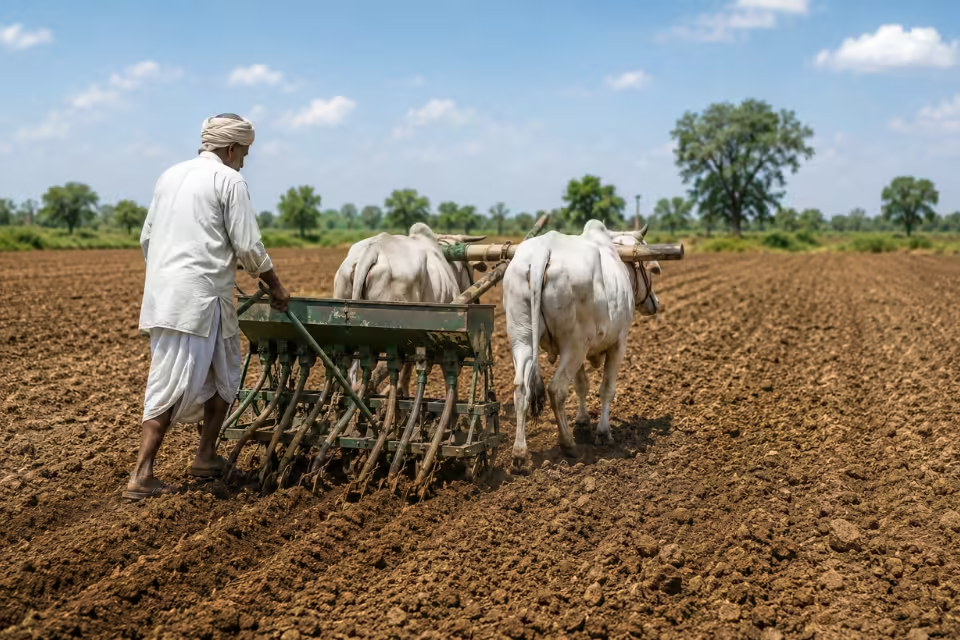
Hybrid bajra farming is rapidly transforming Indian agriculture, especially in drought-prone regions where water scarcity and rising temperatures are affecting traditional crops. Bajra, also known as pearl millet, is one of the most climate-resilient cereal crops cultivated in India. With the introduction of advanced hybrid seeds, farmers are now achieving significantly higher yields, better disease resistance, and improved fodder quality. India is the world’s largest producer of pearl millet, contributing nearly 40% of global production according to the Food and Agriculture Organization (FAO). Bajra is widely cultivated across Rajasthan, Haryana, Gujarat, Uttar Pradesh, Maharashtra, and parts of Karnataka. As climate change intensifies, hybrid bajra farming is emerging as a profitable and sustainable farming model for Indian farmers. Know more about seeds Why Hybrid Bajra Farming is Growing Rapidly in India The demand for hybrid bajra seeds has increased sharply due to changing climatic conditions and growing awareness about millet nutrition. According to the Ministry of Agriculture & Farmers Welfare: India cultivates bajra on more than 7 million hectares annually. Rajasthan alone contributes over 35% of India’s total bajra production. Hybrid pearl millet varieties can produce 25–40% higher yields compared to traditional open-pollinated varieties. Millet consumption in India increased significantly after the International Year of Millets 2023 initiative launched by the United Nations. Important Agricultural Studies & Research ICAR Research Findings Research conducted by the Indian Council of Agricultural Research (ICAR) revealed that modern hybrid bajra farming varieties provide: 20–30% higher grain yield Better drought tolerance Faster maturity periods Improved nutrient absorption efficiency ICRISAT Study on Water Efficiency The International Crops Research Institute for the Semi-Arid Tropics (ICRISAT) reported that pearl millet requires: Nearly 70% less water than rice Around 40% less water than maize This makes hybrid bajra farming ideal for dryland and low-rainfall regions. Nutritional Studies on Bajra According to studies published by the National Institute of Nutrition (NIN): Bajra contains nearly 8–12% protein It is rich in iron, zinc, magnesium, and dietary fiber Pearl millet contains almost 5 times more iron than polished rice Due to its high nutritional value, bajra demand is increasing in urban health-conscious markets as well. You can also : Kharif Sowing Calendar 2026: Best Hybrid Vegetable Seeds to Plant in June Benefits of Hybrid Bajra Farming 1. Excellent Drought Resistance Hybrid bajra farming performs exceptionally well under extreme heat and low rainfall conditions. Modern hybrids can tolerate temperatures above 42°C. 2. Higher Yield Potential Traditional bajra varieties generally yield: 10–14 quintals per hectare Modern hybrid bajra farming varieties can produce: 22–30 quintals per hectare under proper management 3. Better Fodder Production Apart from grain, hybrid bajra also provides high-quality green fodder for livestock. Increased biomass production Better digestibility for cattle Higher milk productivity support 4. Disease Resistance Modern hybrids show strong resistance against: Downy mildew Ergot disease Rust Smut diseases This reduces crop loss and lowers pesticide expenses. 5. Early Maturity Many hybrid bajra varieties mature within 80–95 days, helping farmers: Escape drought stress Take additional crops in rotation Reduce farming risks Climate and Soil Requirements for Hybrid Bajra Farming Ideal Climate Hybrid bajra farming grows best in: Semi-arid and arid climates Temperature range: 25°C to 35°C Rainfall: 300–600 mm annually Bajra can survive even under erratic monsoon conditions. Best Soil Type Suitable soils include: Sandy loam soils Light-textured soils Well-drained black soils Ideal Soil pH 6.5 to 7.5  Avoid waterlogged fields because excess moisture damages root growth. Land Preparation for Hybrid Bajra Farming Proper field preparation is essential for maximum productivity. Steps for Land 1. Preparation First Ploughing Use a mouldboard or iron plough to break compact soil. 2.Secondary Tillage Carry out 2–3 harrowings to achieve fine tilth. 3.Remove Weeds and Crop Residues Clear previous crop residues to reduce disease risk. 4. Organic Manure Application Apply: 10–15 tonnes FYM (Farmyard Manure) per hectare This improves: Soil fertility Moisture retention Microbial activity 5. Deep Ploughing Research from agricultural universities suggests deep ploughing once every 2–3 years improves: Root penetration Water infiltration Nutrient absorption Best Time for Hybrid Bajra Farming in India Kharif Season Sowing The ideal sowing period is: June to July depending upon monsoon arrival. Summer Bajra Sowing In irrigated regions: February to March is considered suitable. State-Wise Sowing Window State Ideal Sowing Time Rajasthan Late June to Early July Haryana First fortnight of July Gujarat June End to July Maharashtra June to Mid July Uttar Pradesh July First Week Timely sowing increases yield significantly and reduces pest attack. Seed Rate and Sowing Method in Hybrid Bajra Farming Recommended Seed Rate 4–5 kg certified hybrid seed per hectare Recommended Spacing Row spacing: 45 cm Plant spacing: 10–15 cm Sowing Depth 1.5–2.5 cm depth Shallow sowing ensures better germination. Seed Treatment Treat seeds before sowing using: Metalaxyl or Thiram fungicide Biofertilizers like Azospirillum or PSB This protects against seed-borne diseases and improves nutrient uptake. bUY hybrid seeds Best Hybrid Bajra Seeds for Indian Farmers Choosing high-quality seeds is one of the most important factors in successful hybrid bajra farming. Features of Good Hybrid Bajra Seeds High germination percentage Strong drought tolerance Uniform grain size Disease resistance Higher tillering ability Better fodder quality Why Farmers Prefer Platinum Seeds Platinum Seeds offers high-performance hybrid bajra seeds specially developed for Indian climatic conditions. Advantages of Platinum Seeds Hybrid Bajra Varieties Excellent drought tolerance Higher grain and fodder yield Uniform crop maturity Better resistance against major diseases Suitable for low-rainfall areas Strong root system for moisture conservation  Explore premium hybrid bajra seeds at:https://platinumseeds.in/ Fertilizer and Nutrient Management in Hybrid Bajra Farming Hybrid crops require balanced nutrition because they produce more biomass. Recommended Fertilizer Dose Nitrogen (N) 80–100 kg per hectare Phosphorus (P2O5) 40–50 kg per hectare Potash (K2O) 20–30 kg per hectare Fertilizer Application Schedule Basal Dose Apply: 50% Nitrogen 100% Phosphorus 100% Potas at sowing. Top Dressing Apply remaining Nitrogen in two splits: At knee-high stage Before flowering stage Micronutrient Management Zinc deficiency is common in bajra-growing regions. Apply: Zinc Sulphate @ 25 kg/hectare if deficiency symptoms appear. Irrigation Management in Hybrid Bajra Farming Although

Complete Guide to Hybrid Bajra Farming in India (2026) — From Sowing to Harvesting Read More »

Kharif sowing calendar 2026

Kharif Sowing Calendar 2026: Best Hybrid Vegetable Seeds to Plant in June

Kharif Sowing Calendar 2026: Best Hybrid Vegetable Seeds to Plant in June Planning your monsoon garden starts with a clear Kharif sowing calendar 2026. As the summer heat begins to fade and the first rains of June approach, it is the perfect time for Indian gardeners and farmers to select high-yielding hybrid seeds that thrive in humid, tropical conditions. Why June is Critical for Your Kharif Sowing Calendar 2026 The month of June marks the beginning of the Southwest Monsoon in India. Following a strategic Kharif sowing calendar 2026 ensures that your crops receive the natural hydration they need while avoiding the extreme waterlogging that can happen later in July. Hybrid seeds are especially recommended for this window because they offer better disease resistance against monsoon-borne fungi and pests. know more about the Seeds Top Hybrid Vegetable Seeds for June Planting When following the Kharif sowing calendar 2026, focusing on “Hybrid F1” varieties will significantly increase your yield. These seeds are specifically bred for vigor and uniform fruit quality. Hybrid Okra (Bhindi): Varieties like Shri Radhika or Sarbati are excellent for June. They are tolerant to Yellow Vein Mosaic Virus, which is common in the rainy season. Buy premium okra hydrid Hybrid Okra (Bhindi): Varieties like Shri Radhika or Sarbati are excellent for June. They are tolerant to Yellow Vein Mosaic Virus, which is common in the rainy season. Buy premium okra hydrid Hybrid Okra (Bhindi): Varieties like Shri Radhika or Sarbati are excellent for June. They are tolerant to Yellow Vein Mosaic Virus, which is common in the rainy season. Buy premium okra hydrid Bitter Gourd & Bottle Gourd: June is the prime time to sow gourds. Hybrid bottle gourd seeds like Apsara F1 grow rapidly and produce heavy fruits. buy premium bitter gourd Tomato (Heat & Wilt Resistant): Use the Kharif sowing calendar 2026 to time your tomato nursery. Look for hybrids like Abhilash or Ayushman that can handle the humidity. Buy premium tomato seed Chilli & Brinjal: These are staple Kharif crops. Sowing them in early June allows the root systems to establish before the heavy downpours arrive. buy premium chilli seed How to Prepare Using the Kharif Sowing Calendar 2026 Success in the monsoon season isn’t just about the seeds; it’s about the soil. Your Kharif sowing calendar 2026 should include a week for soil preparation. Ensure your garden has excellent drainage. Use a mix of 40% garden soil, 30% cocopeat, and 30% organic vermicompost to keep the soil airy. Pro Tip: In the Kharif sowing calendar 2026, June is also the best time to sow “Zaid-Kharif” bridge crops like Cucumber and Ridge Gourd, which love the climbing support of a monsoon trellis. Essential Steps for June Sowing: Seed Treatment: Treat your hybrid seeds with fungicides to prevent “damping off.” Raised Beds: Plant on raised beds to ensure excess rainwater drains away from the stems. Mulching: Use organic mulch to prevent soil splashing onto leaves, which reduces fungal infections. Conclusion Adhering to a structured Kharif sowing calendar 2026 is the most effective way to guarantee a bountiful harvest during the monsoon. By choosing high-quality hybrid vegetable seeds in June, you are giving your plants a head start with superior genetics and timing. Whether you are a terrace gardener or a small-scale farmer, the right planning this June will lead to a lush, green, and productive monsoon garden. F.A.Q. Supporting Subheading Occaecati simili terafvd que? Lorem ipsum dolor sit amet, consectetur adipiscing elit. Ut elit tellus, luctus nec ullamcorper mattis, pulvinar dapibus leo. Massa quosoluta yrvagsv aja? Lorem ipsum dolor sit amet, consectetur adipiscing elit. Ut elit tellus, luctus nec ullamcorper mattis, pulvinar dapibus leo. Nam error corrupssa, suspendisse pv ehicula eleifend? Lorem ipsum dolor sit amet, consectetur adipiscing elit. Ut elit tellus, luctus nec ullamcorper mattis, pulvinar dapibus leo. Doloremque placeat iaculis, minim adipisicing? Lorem ipsum dolor sit amet, consectetur adipiscing elit. Ut elit tellus, luctus nec ullamcorper mattis, pulvinar dapibus leo. Voluptates omnis quasi do esse qui? Lorem ipsum dolor sit amet, consectetur adipiscing elit. Ut elit tellus, luctus nec ullamcorper mattis, pulvinar dapibus leo. Frequently Asked Questions 1. What are the best vegetables to plant in June according to the Kharif sowing calendar 2026? The best vegetables for June include Okra (Bhindi), Bottle Gourd, Bitter Gourd, Sponge Gourd, Chillies, and Brinjal. These crops thrive in high humidity and warm temperatures. 2. Why should I use hybrid seeds for the 2026 Kharif season? Hybrid seeds (F1) provide higher yields, uniform fruit size, and, most importantly, better resistance to pests and diseases that are prevalent during the rainy season. 3. Can I start a tomato nursery in June? Yes, the Kharif sowing calendar 2026 suggests starting tomato seedlings in June under a semi-shade net so they are ready for transplanting by the time the heavy rains stabilize in July. 4. How do I manage drainage for Kharif crops? Always plant on raised beds or in grow bags with multiple drainage holes. This prevents water from stagnating around the roots, which is the leading cause of plant death in the monsoon.

Kharif Sowing Calendar 2026: Best Hybrid Vegetable Seeds to Plant in June Read More »

Shopping Cart