
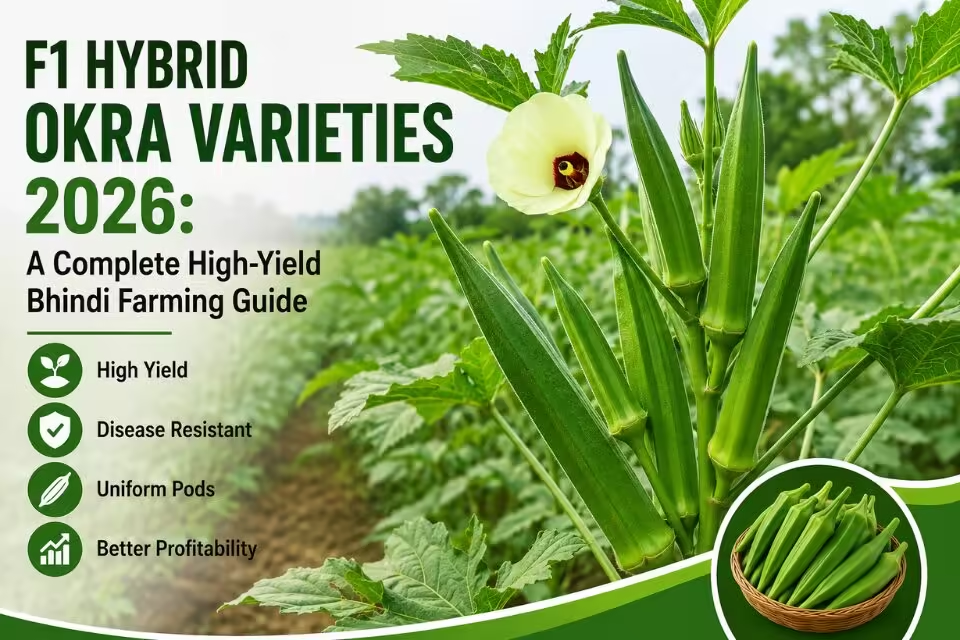
Okra, commonly known as bhindi or lady’s finger, is one of the most widely grown vegetable crops in India. With rising demand in both domestic and export markets, farmers today are increasingly shifting from open-pollinated varieties to F1 hybrid okra varieties for better yield, uniform pod quality, and stronger disease resistance. At Platinum Seeds, a 3rd-generation seed company with 19+ years of experience in Indian agriculture, we’ve developed and sourced okra hybrids specifically built for this shift. In this guide, we cover everything you need to know about choosing and growing hybrid okra in 2026.

F1 hybrid seeds are produced by crossing two genetically distinct parent lines, resulting in offspring with superior traits. When it comes to okra cultivation, hybrid varieties consistently outperform traditional ones in several ways:
- Higher yield per acre compared to open-pollinated varieties
- Uniform pod size, color, and shape, which is important for market pricing and export quality
- Better resistance to Yellow Vein Mosaic Virus (YVMV), one of the most damaging okra diseases
- Faster maturity, with many hybrids ready for first picking within 45–50 days
- Stronger plant vigor, allowing consistent performance across varying soil and climate conditions
For both small farmers and B2B seed buyers, these advantages translate directly into higher profitability per season — which is why hybrid okra now dominates commercial cultivation across India.
You can also read : How Often Should You Harvest Okra Crop for Maximum Yield? What Varieties of Hybrid Okra Seeds Should You Choose?
Platinum Seeds F1 Hybrid Okra Seeds Range
As a trusted hybrid vegetable seeds company in India, Platinum Seeds offers F1 hybrid okra varieties built for farmer profitability and market demand. Every variety is backed by our commitment to complete genetic and physical purity, Government of India GOT clearances, and a no-questions-asked return policy — giving farmers and dealers confidence in every seed pack.
You can explore the full range directly on our Okra Seeds page.
Best Time to Sow F1 Hybrid Okra Seeds
Okra is a warm-season crop and can be grown in multiple cycles across the year depending on your region:
Season | Sowing Time |
Summer/Zaid | February – March |
Kharif | June – July |
Late Kharif | August – September |
Hybrid okra seeds germinate best when soil temperature is above 20°C. Sowing during extreme cold or waterlogged conditions can significantly reduce germination rates.
Key Traits to Look for in an F1 Hybrid Okra Seeds Variety
When selecting a hybrid variety, farmers should evaluate the following:
- YVMV and Enation Leaf Curl Virus resistance — the two biggest disease threats to okra crops
- Pod characteristics — dark green color, tender texture, and thornless pods are preferred in most markets
- Plant height and branching habit — determines suitability for high-density planting
- Days to first harvest — early varieties allow quicker returns and multiple harvest cycles
- Yield potential per acre — always compare field performance data before bulk purchase
Platinum Seeds’ in-house R&D and collaborative sourcing model — partnering with India’s most proven seed producers — ensures every okra variety we offer meets these standards before it reaches a farmer’s field.
You can also read : Best Hybrid Okra Seeds for Higher Yield and Better Profit
Spacing, Soil, and Fertilizer Recommendations
Proper agronomic practices maximize the genetic potential of hybrid seeds:
- Soil pH: 6.0 – 6.8 (well-drained loamy soil is ideal)
- Spacing: 45 cm x 30 cm for standard varieties; can be adjusted for high-density hybrid types
- Seed rate: Approximately 4–5 kg per acre, depending on the variety
- Fertilizer: A balanced NPK application along with organic manure at the time of land preparation supports strong early growth
- Irrigation: Regular watering during flowering and pod formation stages is critical for yield
Common Challenges in Okra Farming and How Hybrids Help
Traditional okra varieties are highly susceptible to YVMV, which can cause yield losses of up to 50–90% in severe cases. F1 hybrids bred with genetic resistance to this virus significantly reduce crop loss risk, making them a safer long-term investment for farmers — especially in regions with high whitefly (the virus vector) populations.
Additionally, hybrid vigor often results in stronger root systems, helping plants better withstand moisture stress and moderate nutrient deficiencies compared to non-hybrid counterparts.
You can also read : How to choose the best quality of seeds for farming in India

For seed dealers and distributors, hybrid okra represents a consistently in-demand product category. Partnering with Platinum Seeds adds further advantages:
- Year-round cultivation potential across multiple growing seasons
- Strong repeat-purchase behavior, as hybrid seeds cannot be saved for replanting
- Growing export demand for uniform, blemish-free okra pods
- A 19+ year legacy and pan-India network (Delhi and Bangalore operations) that builds dealer and farmer trust
- GOT-cleared, quality-tested seed stock for reliable bulk supply
Conclusion
Choosing the right F1 hybrid okra variety is one of the most important decisions a farmer can make for a profitable bhindi crop in 2026. With Platinum Seeds’ Rockstar Okra and Superstar Okra — backed by 19+ years of seed expertise, in-house R&D, and strict quality standards — farmers and dealers get access to genetics that consistently perform in the field. For bulk sourcing or variety-specific recommendations tailored to your region.