
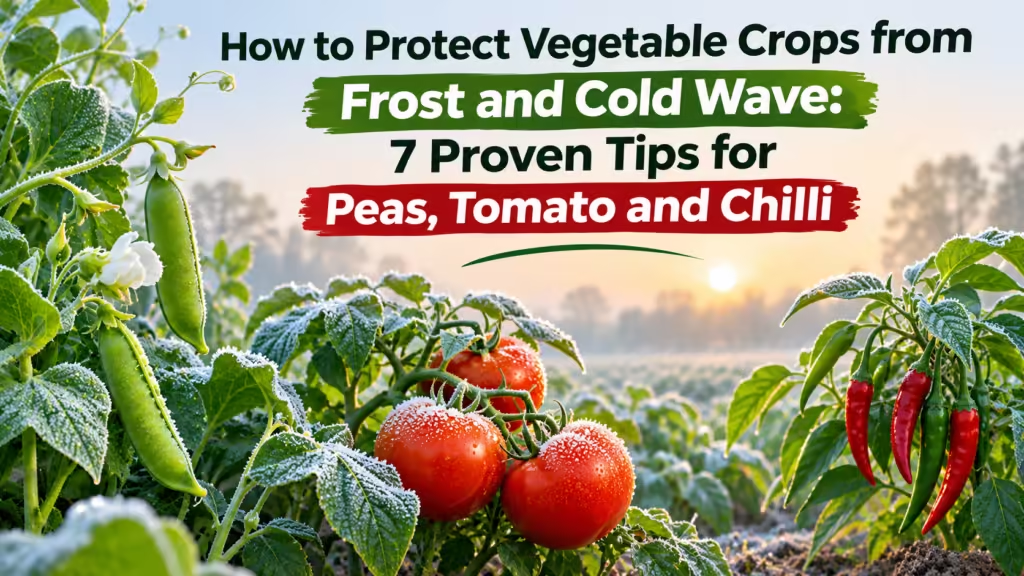
Every winter, one cold night can undo weeks of hard work. Frost can blacken tomato leaves, drop chilli flowers and scorch pea pods overnight. The good news is that most frost damage can be reduced with low-cost steps taken before the cold wave arrives.
At Platinum Seeds, a seed company in India that has served farmers for three generations, we speak to growers across many states every season. This guide brings together practical frost-protection methods that Indian agricultural universities and Krishi Vigyan Kendras (KVKs) commonly recommend, explained in simple steps for peas, tomato and chilli.
What is frost and when does it happen?
Frost happens when the temperature near the ground drops to about 0°C or below. This can occur even when the weather report shows a minimum of 4 to 5°C, because the air close to the crop is colder than the air measured at a weather station. Frost is most likely on clear, windless nights after a cold day, mostly in December and January across North India’s plains and hilly foothills.
Cold wave and frost are not the same thing. A cold wave is a spell of unusually low temperature over several days (the India Meteorological Department, IMD, issues official cold wave warnings). Frost is a night-time ground event that can happen inside a cold wave or on a single clear night.
Read More: क्लस्टर बीन्स और फ्रेंच बीन्स की खेती: अधिक उपज के लिए बुवाई का सही समय और हाइब्रिड किस्में
Which crops are most at risk?
Crop | How cold affects it | Risk level |
Chilli | Young plants and flowers are damaged easily, and fruit set falls in cold weather | High |
Tomato | Growth slows in prolonged cold, flowers drop, and frost can kill leaves and shoots | Medium to high |
Peas | Tolerates cool weather well, but flowers and young pods can be damaged in hard frost | Low to medium |
Young seedlings and nursery beds are always more vulnerable than established plants.
7 proven ways to protect your vegetable crops from frost
1. Give a light irrigation before a cold night
Moist soil stores and releases more heat than dry soil. If IMD or a local advisory warns of frost, give a light irrigation in the afternoon or evening before the cold night. Do not flood the field, because waterlogging in winter can cause root rot.
2. Cover nurseries and young plants
Cover seedlings in the evening with a polythene sheet, a low tunnel, a shade net or dry straw thatch. Keep the cover from touching the leaves, and leave the east side open or remove the cover in the morning so plants get sunlight and air. A cover left on all day can trap moisture and invite disease.
3. Mulch around the plants
Spread paddy straw, dry leaves or crop residue around the base of the plants. Mulch protects roots from sudden cold, conserves moisture and keeps the soil temperature steadier. Do not pile mulch against the stem.
4. Use windbreaks and light smoke
Cold winds from the north and north-west make frost damage worse. A hedge, a row of tall crops or a straw screen on that side can help. On a frost night, farmers also create light smoke by slowly smouldering dry weeds or leaves in small, controlled piles on the windward side of the field in the early morning hours. Smoke acts like a thin blanket. Keep fires small and supervised, and follow your local rules. Never burn crop residue in a way that is banned in your area.
5. Consider a wettable sulphur spray (check with your KVK first)
Many agricultural advisories suggest spraying wettable sulphur at about 1 gram per litre of water before an expected frost night, because it is believed to improve cold tolerance in some crops. Do not use sulphur on cucurbits (gourds, melons, cucumber), which are sulphur-sensitive. Results vary with crop stage and weather, so confirm the product and dose with your nearest KVK or agricultural officer and follow the label.
6. Manage nutrition carefully
Avoid heavy nitrogen doses and heavy pruning just before or during a cold spell, because they push soft new growth that frost damages first. Balanced nutrition with adequate potash supports sturdier plants. Apply fertiliser in the dose recommended for your soil and crop stage.
7. Plan sowing time and choose quality seed
Prevention starts at sowing. Time your nursery and transplanting so the most delicate stage (flowering and fruit set) does not fall in the coldest weeks. Start with seed that has high germination and genetic purity, because vigorous seedlings recover faster from cold stress. You can explore our F1 hybrid vegetable seeds, vegetable seeds and hybrid peas seeds.
Read More: Cluster Beans & French Beans Farming: Best Sowing Time and Hybrid Varieties for Higher Yield
Crop-wise quick tips
Peas: Avoid irrigation in the morning of a frost day. Watch for powdery mildew after foggy, humid spells and scout the field every two to three days.
Tomato: Cover nursery beds every evening, stake plants so they stay off cold, damp soil, and watch for early and late blight after fog and dew.
Chilli: Protect nursery and newly transplanted plants first. Use covers and mulch, and delay transplanting if a cold wave is forecast.
What to do after a frost
- Do not cut damaged leaves and shoots right away. Wait several days to see where new growth appears, then prune only the dead parts.
- Give a light irrigation and a balanced nutrient dose once the weather warms up.
- Scout for fungal disease (blight, powdery mildew) in the following days and consult your local agricultural officer before spraying anything.
- Replant gaps in the nursery early so you do not lose the season.
Where to get reliable weather and crop advice
- IMD (India Meteorological Department): official cold wave and weather warnings at mausam.imd.gov.in
- Meghdoot app: agro-advisories from IMD and ICAR
- Kisan Call Centre: 1800-180-1551
- Your local KVK: crop and region-specific guidance
Need quality seeds and expert guidance?
Platinum Seeds is a seed company in India trusted by farmers, dealers and distributors across the country. Tell us your crop, region and sowing month, and our team will help you choose the right variety.
Contact Platinum Seeds today or call +91 99998 07771.
Frequently asked questions
What temperature is dangerous for tomato and chilli?
Growth slows in prolonged cold, and temperatures near 0°C at plant level can cause frost injury. Because ground temperature is lower than the reported air temperature, act early whenever IMD forecasts a cold night.
Is irrigation really helpful before frost?
Yes. Moist soil holds more heat, so a light irrigation before a frost night is a standard, low-cost recommendation. Avoid waterlogging.
Can peas survive frost?
Peas tolerate cool weather better than tomato or chilli, but flowers and young pods can be damaged by hard frost.
How do I protect a nursery bed from frost?
Cover it in the evening with polythene or a low tunnel and open it in the morning so seedlings get light and air.
Which is the best seed company in India for vegetable seeds?
Choose a company that offers genetically pure, tested seed and clear support. Platinum Seeds offers F1 hybrid vegetable seeds with testing for genetic and physical purity and germination, and you can reach our team any time.