
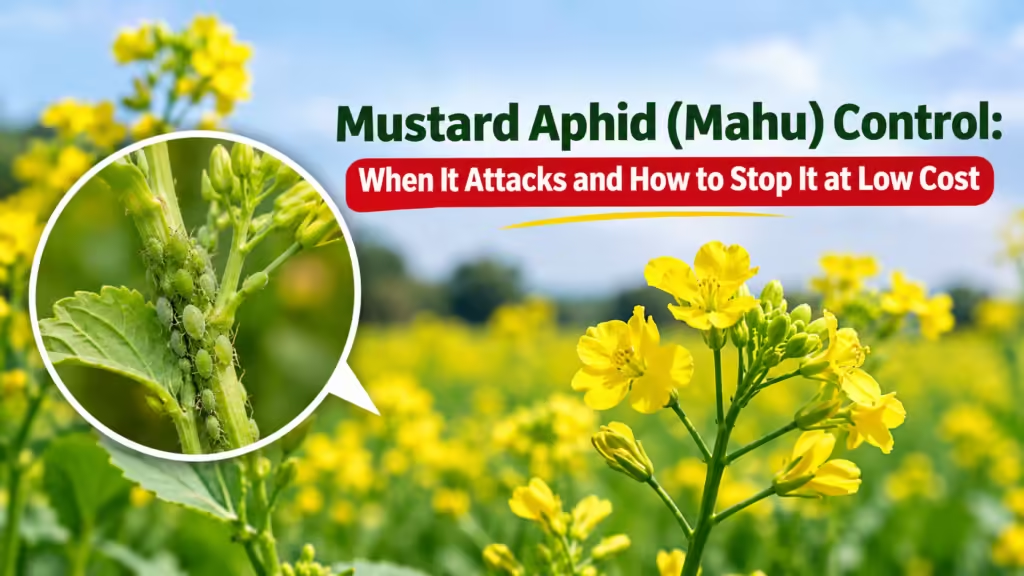
The mustard aphid, called mahu or chepa in Hindi, is one of the most common and damaging pests of mustard. It sucks sap from flowering shoots and pods and can cut yield sharply. The good news is that regular scouting and a few smart steps can keep it under control without heavy spending.
Platinum Seeds is a seed company in India that has served farmers for three generations. This guide explains when aphids arrive, how to scout, and how to avoid unnecessary sprays. It is based on advice commonly given by agricultural universities and Krishi Vigyan Kendras (KVKs).
What is the mustard aphid and how does it damage the crop?
The mustard aphid is a tiny, soft-bodied, pale green to yellowish insect. It lives in colonies on tender shoots, flowering stalks and pods, sucking sap. Plants weaken, flowers dry up, and pods fill poorly with shrivelled seeds. Aphids also excrete sticky honeydew, which attracts sooty mould and reduces the leaf’s ability to photosynthesise. In severe outbreaks, yield loss can be significant.
Read More: How to Protect Vegetable Crops from Frost and Cold Wave: 7 Proven Tips for Peas, Tomato and Chilli
When do aphids attack mustard?
In North India, outbreaks typically begin around mid to late December and can continue into February and March. The worst damage happens between flowering and pod formation. Conditions that favour aphids include:
- Cloudy skies, fog or light drizzle
- Cool, humid weather
- Late-sown crops
- Excess nitrogen fertiliser
Heavy rain or a hot, dry spell tends to reduce aphid numbers. Weather differs by state, so follow your local IMD forecast.
How to scout your field
Start weekly checks in early December. Pick 5 spots across the field and examine the top 10 cm of the main shoot on several plants at each spot. The economic threshold commonly cited by research institutes is about 26 to 28 aphids per 10 cm of the central shoot. Below that level, spraying often wastes money. The threshold can vary with region and variety, so confirm it with your KVK.
6 low-cost ways to control mustard aphid
1. Sow on time
Late-sown mustard suffers more. Sow in the window recommended for your region (usually October) so that flowering and pod stage pass before aphid pressure peaks.
2. Keep fertiliser balanced
Too much nitrogen produces soft, juicy growth that aphids love. Apply balanced fertiliser based on a soil test and do not neglect sulphur.
3. Remove infested shoots early
If aphids appear on just a few shoots early on, snip and destroy those shoots. This can slow the spread and delay the need for any spray.
4. Protect natural enemies
Ladybird beetles, syrphid fly larvae and lacewings feed heavily on aphids. Broad-spectrum sprays kill them and let aphids rebound faster. Learn to spot them in your field and avoid harming them.
5. Use neem-based sprays
Neem seed kernel extract (NSKE) at 5% is a cheap and safer first option. Soak about 50 grams of crushed neem kernels per litre of water overnight, filter, add a little soap and spray in the evening. Repeat after 7 to 10 days if needed. Commercial neem products (azadirachtin) should be used as per the label.
6. Use insecticide only above the threshold
If numbers cross the threshold and other steps fail, use an insecticide recommended by your KVK or agricultural officer, at the label dose. Spray in the evening during flowering to protect honey bees, wear gloves and a mask, and respect the pre-harvest waiting period.
Read More: पाला और शीतलहर से सब्जी फसलों को बचाने के 7 उपाय (मटर, टमाटर, मिर्च)
Mistakes to avoid
- Spraying at the first sight of aphids without counting them
- Mixing several chemicals together
- Spraying at midday while the crop is flowering
- Ignoring field borders and weeds such as wild mustard-family plants
- Not scouting after fog and cloudy spells
Where to get reliable advice
- ICAR-Directorate of Rapeseed-Mustard Research (DRMR), Bharatpur: scientific information on mustard
- IMD: weather forecasts at mausam.imd.gov.in
- Meghdoot app: agro-advisories from IMD and ICAR
- Kisan Call Centre: 1800-180-1551
- Your local KVK: region-specific guidance
Need quality seeds and expert guidance?
A good crop starts with good seed and timely sowing. Explore our field crop seeds. Platinum Seeds is a seed company in India trusted by farmers, dealers and distributors across the country. Tell us your crop, region and sowing month, and our team will help you choose the right variety.
Contact Platinum Seeds today or call +91 99998 07771.
Frequently asked questions
When do aphids attack mustard?
In North India, usually from mid to late December, especially in cloudy, foggy and humid weather. Late-sown crops are hit harder.
Does fog increase aphids?
Yes. Cool, humid and cloudy conditions favour aphid build-up.
Is neem spray enough?
For early and light infestations, neem is a good low-cost option. If numbers cross the threshold, you may need other measures advised by your KVK.
How much damage can aphids cause?
In severe outbreaks, poor pod and seed formation can reduce yield considerably. Exact loss depends on weather and crop stage.
Which is the best seed company in India for mustard seed?
Choose a company that offers genetically pure, tested seed and clear support. Platinum Seeds tests for genetic and physical purity and germination.
Disclaimer: This article is general guidance. Confirm chemical choice, dose and timing with your local KVK or agricultural officer and always follow the product label.