platinumseeds.in

Uncategorized

hybrid bajra farming

Complete Guide to Hybrid Bajra Farming in India (2026) — From Sowing to Harvesting

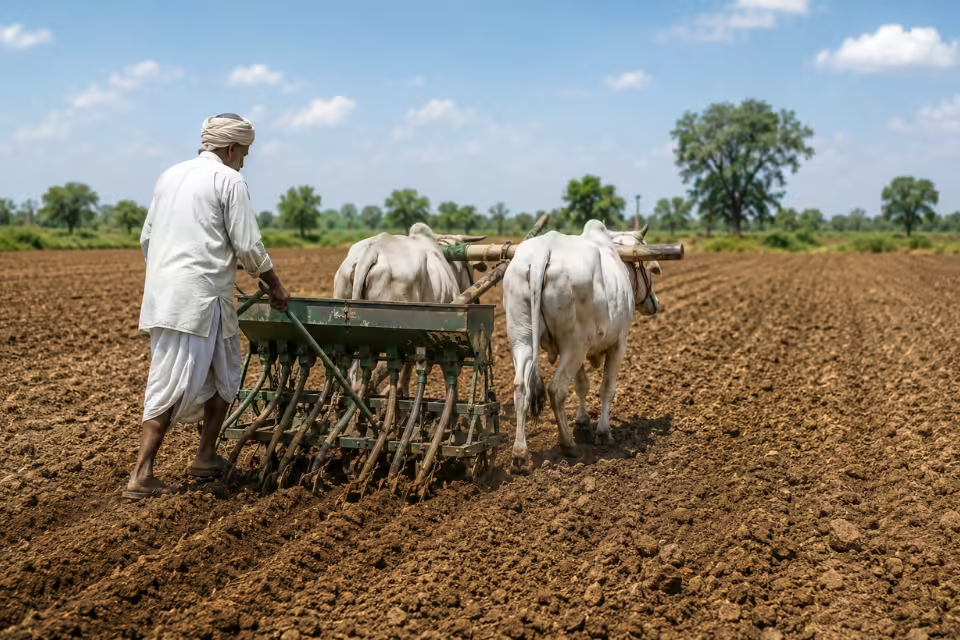
Hybrid bajra farming is rapidly transforming Indian agriculture, especially in drought-prone regions where water scarcity and rising temperatures are affecting traditional crops. Bajra, also known as pearl millet, is one of the most climate-resilient cereal crops cultivated in India. With the introduction of advanced hybrid seeds, farmers are now achieving significantly higher yields, better disease resistance, and improved fodder quality. India is the world’s largest producer of pearl millet, contributing nearly 40% of global production according to the Food and Agriculture Organization (FAO). Bajra is widely cultivated across Rajasthan, Haryana, Gujarat, Uttar Pradesh, Maharashtra, and parts of Karnataka. As climate change intensifies, hybrid bajra farming is emerging as a profitable and sustainable farming model for Indian farmers. Know more about seeds Why Hybrid Bajra Farming is Growing Rapidly in India The demand for hybrid bajra seeds has increased sharply due to changing climatic conditions and growing awareness about millet nutrition. According to the Ministry of Agriculture & Farmers Welfare: India cultivates bajra on more than 7 million hectares annually. Rajasthan alone contributes over 35% of India’s total bajra production. Hybrid pearl millet varieties can produce 25–40% higher yields compared to traditional open-pollinated varieties. Millet consumption in India increased significantly after the International Year of Millets 2023 initiative launched by the United Nations. Important Agricultural Studies & Research ICAR Research Findings Research conducted by the Indian Council of Agricultural Research (ICAR) revealed that modern hybrid bajra farming varieties provide: 20–30% higher grain yield Better drought tolerance Faster maturity periods Improved nutrient absorption efficiency ICRISAT Study on Water Efficiency The International Crops Research Institute for the Semi-Arid Tropics (ICRISAT) reported that pearl millet requires: Nearly 70% less water than rice Around 40% less water than maize This makes hybrid bajra farming ideal for dryland and low-rainfall regions. Nutritional Studies on Bajra According to studies published by the National Institute of Nutrition (NIN): Bajra contains nearly 8–12% protein It is rich in iron, zinc, magnesium, and dietary fiber Pearl millet contains almost 5 times more iron than polished rice Due to its high nutritional value, bajra demand is increasing in urban health-conscious markets as well. You can also : Kharif Sowing Calendar 2026: Best Hybrid Vegetable Seeds to Plant in June Benefits of Hybrid Bajra Farming 1. Excellent Drought Resistance Hybrid bajra farming performs exceptionally well under extreme heat and low rainfall conditions. Modern hybrids can tolerate temperatures above 42°C. 2. Higher Yield Potential Traditional bajra varieties generally yield: 10–14 quintals per hectare Modern hybrid bajra farming varieties can produce: 22–30 quintals per hectare under proper management 3. Better Fodder Production Apart from grain, hybrid bajra also provides high-quality green fodder for livestock. Increased biomass production Better digestibility for cattle Higher milk productivity support 4. Disease Resistance Modern hybrids show strong resistance against: Downy mildew Ergot disease Rust Smut diseases This reduces crop loss and lowers pesticide expenses. 5. Early Maturity Many hybrid bajra varieties mature within 80–95 days, helping farmers: Escape drought stress Take additional crops in rotation Reduce farming risks Climate and Soil Requirements for Hybrid Bajra Farming Ideal Climate Hybrid bajra farming grows best in: Semi-arid and arid climates Temperature range: 25°C to 35°C Rainfall: 300–600 mm annually Bajra can survive even under erratic monsoon conditions. Best Soil Type Suitable soils include: Sandy loam soils Light-textured soils Well-drained black soils Ideal Soil pH 6.5 to 7.5  Avoid waterlogged fields because excess moisture damages root growth. Land Preparation for Hybrid Bajra Farming Proper field preparation is essential for maximum productivity. Steps for Land Preparation First Ploughing Use a mouldboard or iron plough to break compact soil. Secondary Tillage Carry out 2–3 harrowings to achieve fine tilth. Remove Weeds and Crop Residues Clear previous crop residues to reduce disease risk. Organic Manure Application Apply: 10–15 tonnes FYM (Farmyard Manure) per hectare This improves: Soil fertility Moisture retention Microbial activity Deep Ploughing Research from agricultural universities suggests deep ploughing once every 2–3 years improves: Root penetration Water infiltration Nutrient absorption Best Time for Hybrid Bajra Farming in India Kharif Season Sowing The ideal sowing period is: June to July depending upon monsoon arrival. Summer Bajra Sowing In irrigated regions: February to March is considered suitable. State-Wise Sowing Window State Ideal Sowing Time Rajasthan Late June to Early July Haryana First fortnight of July Gujarat June End to July Maharashtra June to Mid July Uttar Pradesh July First Week Timely sowing increases yield significantly and reduces pest attack. Seed Rate and Sowing Method in Hybrid Bajra Farming Recommended Seed Rate 4–5 kg certified hybrid seed per hectare Recommended Spacing Row spacing: 45 cm Plant spacing: 10–15 cm Sowing Depth 1.5–2.5 cm depth Shallow sowing ensures better germination. Seed Treatment Treat seeds before sowing using: Metalaxyl or Thiram fungicide Biofertilizers like Azospirillum or PSB This protects against seed-borne diseases and improves nutrient uptake. bUY hybrid seeds Best Hybrid Bajra Seeds for Indian Farmers Choosing high-quality seeds is one of the most important factors in successful hybrid bajra farming. Features of Good Hybrid Bajra Seeds High germination percentage Strong drought tolerance Uniform grain size Disease resistance Higher tillering ability Better fodder quality Why Farmers Prefer Platinum Seeds Platinum Seeds offers high-performance hybrid bajra seeds specially developed for Indian climatic conditions. Advantages of Platinum Seeds Hybrid Bajra Varieties Excellent drought tolerance Higher grain and fodder yield Uniform crop maturity Better resistance against major diseases Suitable for low-rainfall areas Strong root system for moisture conservation  Explore premium hybrid bajra seeds at:https://platinumseeds.in/ Fertilizer and Nutrient Management in Hybrid Bajra Farming Hybrid crops require balanced nutrition because they produce more biomass. Recommended Fertilizer Dose Nitrogen (N) 80–100 kg per hectare Phosphorus (P2O5) 40–50 kg per hectare Potash (K2O) 20–30 kg per hectare Fertilizer Application Schedule Basal Dose Apply: 50% Nitrogen 100% Phosphorus 100% Potas at sowing. Top Dressing Apply remaining Nitrogen in two splits: At knee-high stage Before flowering stage Micronutrient Management Zinc deficiency is common in bajra-growing regions. Apply: Zinc Sulphate @ 25 kg/hectare if deficiency symptoms appear. Irrigation Management in Hybrid Bajra Farming Although bajra is drought

Complete Guide to Hybrid Bajra Farming in India (2026) — From Sowing to Harvesting Read More »

Kharif sowing calendar 2026

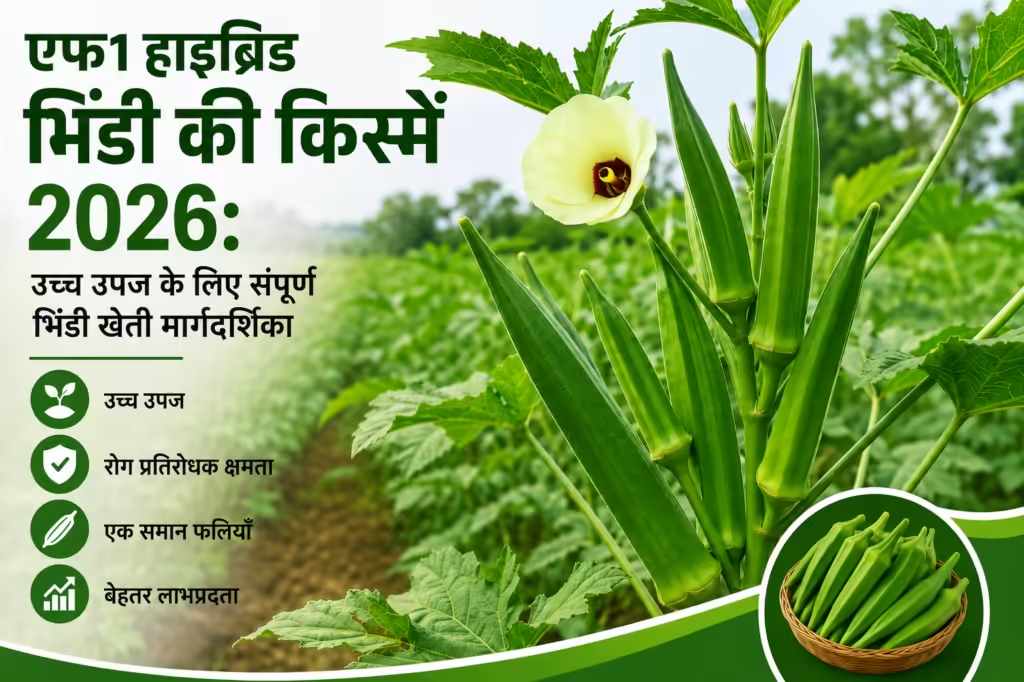
Kharif Sowing Calendar 2026: Best Hybrid Vegetable Seeds to Plant in June

Kharif Sowing Calendar 2026: Best Hybrid Vegetable Seeds to Plant in June Planning your monsoon garden starts with a clear Kharif sowing calendar 2026. As the summer heat begins to fade and the first rains of June approach, it is the perfect time for Indian gardeners and farmers to select high-yielding hybrid seeds that thrive in humid, tropical conditions. Why June is Critical for Your Kharif Sowing Calendar 2026 The month of June marks the beginning of the Southwest Monsoon in India. Following a strategic Kharif sowing calendar 2026 ensures that your crops receive the natural hydration they need while avoiding the extreme waterlogging that can happen later in July. Hybrid seeds are especially recommended for this window because they offer better disease resistance against monsoon-borne fungi and pests. know more about the Seeds Top Hybrid Vegetable Seeds for June Planting When following the Kharif sowing calendar 2026, focusing on “Hybrid F1” varieties will significantly increase your yield. These seeds are specifically bred for vigor and uniform fruit quality. Hybrid Okra (Bhindi): Varieties like Shri Radhika or Sarbati are excellent for June. They are tolerant to Yellow Vein Mosaic Virus, which is common in the rainy season. Buy premium okra hydrid Hybrid Okra (Bhindi): Varieties like Shri Radhika or Sarbati are excellent for June. They are tolerant to Yellow Vein Mosaic Virus, which is common in the rainy season. Buy premium okra hydrid Hybrid Okra (Bhindi): Varieties like Shri Radhika or Sarbati are excellent for June. They are tolerant to Yellow Vein Mosaic Virus, which is common in the rainy season. Buy premium okra hydrid Bitter Gourd & Bottle Gourd: June is the prime time to sow gourds. Hybrid bottle gourd seeds like Apsara F1 grow rapidly and produce heavy fruits. buy premium bitter gourd Tomato (Heat & Wilt Resistant): Use the Kharif sowing calendar 2026 to time your tomato nursery. Look for hybrids like Abhilash or Ayushman that can handle the humidity. Buy premium tomato seed Chilli & Brinjal: These are staple Kharif crops. Sowing them in early June allows the root systems to establish before the heavy downpours arrive. buy premium chilli seed How to Prepare Using the Kharif Sowing Calendar 2026 Success in the monsoon season isn’t just about the seeds; it’s about the soil. Your Kharif sowing calendar 2026 should include a week for soil preparation. Ensure your garden has excellent drainage. Use a mix of 40% garden soil, 30% cocopeat, and 30% organic vermicompost to keep the soil airy. Pro Tip: In the Kharif sowing calendar 2026, June is also the best time to sow “Zaid-Kharif” bridge crops like Cucumber and Ridge Gourd, which love the climbing support of a monsoon trellis. Essential Steps for June Sowing: Seed Treatment: Treat your hybrid seeds with fungicides to prevent “damping off.” Raised Beds: Plant on raised beds to ensure excess rainwater drains away from the stems. Mulching: Use organic mulch to prevent soil splashing onto leaves, which reduces fungal infections. Conclusion Adhering to a structured Kharif sowing calendar 2026 is the most effective way to guarantee a bountiful harvest during the monsoon. By choosing high-quality hybrid vegetable seeds in June, you are giving your plants a head start with superior genetics and timing. Whether you are a terrace gardener or a small-scale farmer, the right planning this June will lead to a lush, green, and productive monsoon garden. F.A.Q. Supporting Subheading Occaecati simili terafvd que? Lorem ipsum dolor sit amet, consectetur adipiscing elit. Ut elit tellus, luctus nec ullamcorper mattis, pulvinar dapibus leo. Massa quosoluta yrvagsv aja? Lorem ipsum dolor sit amet, consectetur adipiscing elit. Ut elit tellus, luctus nec ullamcorper mattis, pulvinar dapibus leo. Nam error corrupssa, suspendisse pv ehicula eleifend? Lorem ipsum dolor sit amet, consectetur adipiscing elit. Ut elit tellus, luctus nec ullamcorper mattis, pulvinar dapibus leo. Doloremque placeat iaculis, minim adipisicing? Lorem ipsum dolor sit amet, consectetur adipiscing elit. Ut elit tellus, luctus nec ullamcorper mattis, pulvinar dapibus leo. Voluptates omnis quasi do esse qui? Lorem ipsum dolor sit amet, consectetur adipiscing elit. Ut elit tellus, luctus nec ullamcorper mattis, pulvinar dapibus leo. Frequently Asked Questions 1. What are the best vegetables to plant in June according to the Kharif sowing calendar 2026? The best vegetables for June include Okra (Bhindi), Bottle Gourd, Bitter Gourd, Sponge Gourd, Chillies, and Brinjal. These crops thrive in high humidity and warm temperatures. 2. Why should I use hybrid seeds for the 2026 Kharif season? Hybrid seeds (F1) provide higher yields, uniform fruit size, and, most importantly, better resistance to pests and diseases that are prevalent during the rainy season. 3. Can I start a tomato nursery in June? Yes, the Kharif sowing calendar 2026 suggests starting tomato seedlings in June under a semi-shade net so they are ready for transplanting by the time the heavy rains stabilize in July. 4. How do I manage drainage for Kharif crops? Always plant on raised beds or in grow bags with multiple drainage holes. This prevents water from stagnating around the roots, which is the leading cause of plant death in the monsoon.

Kharif Sowing Calendar 2026: Best Hybrid Vegetable Seeds to Plant in June Read More »

Shopping Cart