
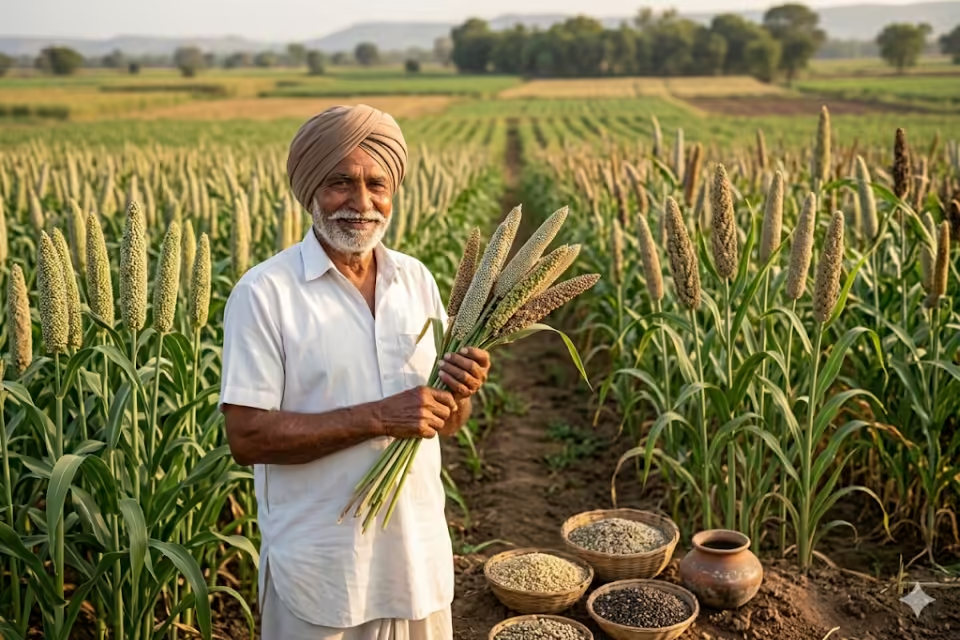
Choosing between Hybrid Bajra vs Desi Bajra in India is one of the most important decisions farmers make before the Kharif season begins. Bajra (Pearl Millet) is one of India’s most drought-tolerant and profitable cereal crops, especially in states like Rajasthan, Haryana, Gujarat, Uttar Pradesh, and Maharashtra.
Today, farmers have two major options — traditional desi bajra seeds and modern hybrid bajra seeds. Both have their own advantages depending on climate conditions, irrigation facilities, soil fertility, and farming goals.
If you want higher grain yield and commercial profits, hybrids may be ideal. If you prefer low-input farming, seed saving, and strong fodder quality, desi bajra remains a trusted choice.
In this detailed guide, we compare Hybrid Bajra vs Desi Bajra India based on yield, climate resilience, cost, nutrition, fodder quality, and profitability to help you choose the right bajra seed for your farm.
You can also read : Complete Guide to Hybrid Bajra Farming in India (2026) — From Sowing to Harvesting
What Is Hybrid Bajra?
Hybrid bajra seeds are developed by crossing two superior parent lines to create a high-performing crop with better productivity, disease resistance, and uniform growth.
These seeds are specially designed for:
- Higher grain production
- Better market value
- Uniform maturity
- Improved disease tolerance
- Strong adaptability to intensive farming
Modern hybrid bajra varieties are widely used in commercial agriculture because they can deliver significantly higher yields when managed properly.
Explore Premium Bajra Seeds Here : https://platinumseeds.in/product-category/pearl-millet/
What Is Desi Bajra?
Desi bajra refers to traditional open-pollinated varieties (OPV) that farmers have cultivated for generations. These seeds are naturally adapted to local climatic conditions and can often survive under harsh environments with minimal inputs.
Key features of desi bajra include:
- Better tolerance to drought
- Lower fertilizer requirement
- Seed saving capability
- Strong fodder production
- Better adaptability to local soils
Many small and marginal farmers still prefer desi bajra because of its low cultivation cost and sustainability.
You can also read : Kharif Sowing Calendar 2026: Best Hybrid Vegetable Seeds to Plant in June
Hybrid Bajra vs Desi Bajra India: Complete Comparison
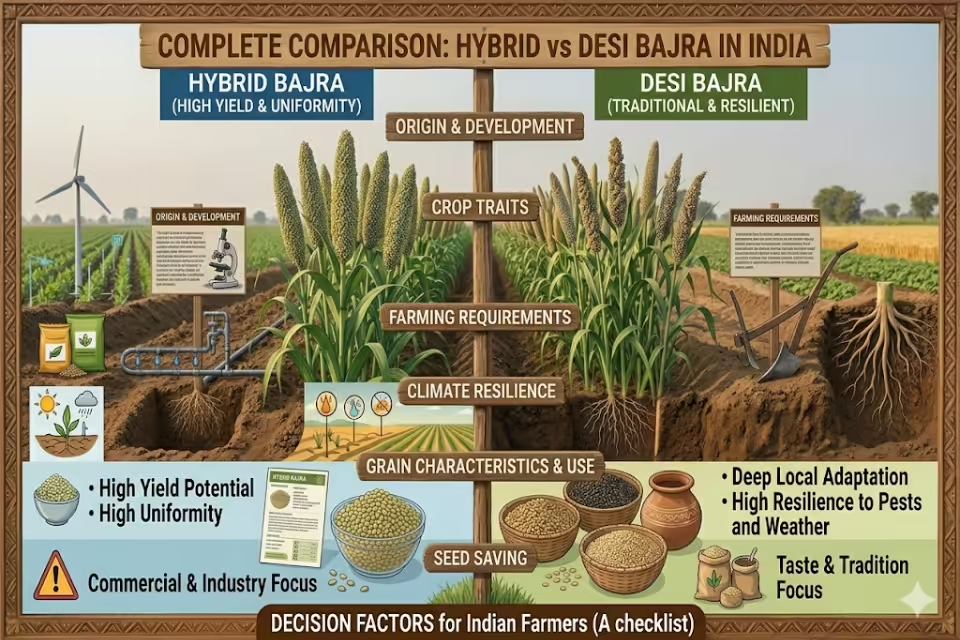
1. Yield and Productivity Comparison
The biggest difference between hybrid bajra and desi bajra is productivity.
Hybrid Bajra Yield
Hybrid bajra varieties are scientifically bred for high output. Under proper irrigation and fertilizer management, hybrid bajra can produce:
- 18–30 quintals grain per hectare
- Higher marketable produce
- Uniform ear-head size
- Better commercial returns
Farmers using advanced farming techniques often choose hybrids for maximum profit.
Desi Bajra Yield
Desi bajra generally produces:
- 8–15 quintals grain per hectare
- Lower grain output
- More biomass and fodder
Although grain production is lower, desi bajra performs well in difficult farming conditions where hybrids may struggle.
Agricultural Statistics
According to ICAR and agricultural research reports:
- India is the largest producer of pearl millet in the world
- Rajasthan contributes over 40% of India’s bajra production
- Hybrid pearl millet adoption has increased yields by nearly 35–50% in irrigated regions
2. Climate Resilience and Drought Tolerance
Desi Bajra: Naturally Hardy
Traditional desi bajra is famous for surviving:
- Low rainfall conditions
- Sandy soils
- Extreme heat
- Nutrient-poor land
This makes it highly suitable for rainfed agriculture.
Hybrid Bajra: High Performance with Proper Inputs
Modern hybrid bajra performs exceptionally well when provided with:
- Timely irrigation
- Balanced fertilizers
- Proper pest management
Many new hybrids are now developed with drought tolerance features, but they still require better crop management than desi varieties.
3. Fertilizer and Water Requirement
Hybrid Bajra
Hybrid crops require:
- Higher nitrogen application
- Better soil fertility
- Controlled irrigation
- Scientific crop management
Without proper inputs, hybrid performance may decline significantly.
Desi Bajra
Desi varieties can grow with:
- Minimal fertilizer
- Low irrigation
- Traditional farming practices
This reduces cultivation expenses for small farmers.
4. Seed Saving and Cost Efficiency
Hybrid Bajra Seeds
Hybrid seeds must be purchased every season because saved seeds lose vigor and productivity due to genetic segregation.
Benefits:
- High commercial output
- Better market returns
Limitations:
- Higher seed cost
- Annual seed purchase required
Desi Bajra Seeds
Farmers can:
- Save seeds every year
- Reuse seeds for multiple seasons
- Reduce dependency on seed companies
This supports sustainable and low-cost farming systems.
5. Fodder Quality Comparison
For livestock farmers, fodder quality is equally important.
Desi Bajra Fodder
Desi bajra produces:
- Taller plants
- Softer stalks
- Higher biomass
This makes it excellent for:
- Dairy farming
- Green fodder
- Dry fodder storage
Hybrid Bajra Fodder
Hybrid stalks may sometimes be:
- Thicker
- Harder
- Less digestible
However, many modern forage hybrids now offer improved fodder quality as well.
You cab also read : How to Choose the Right Hybrid Bajra Seed India: A Practical Guide for Farmers
6. Nutritional Value and Human Health
Both hybrid and desi bajra are highly nutritious and gluten-free.
Bajra is rich in:
- Iron
- Fiber
- Magnesium
- Protein
- Antioxidants
Desi Bajra Nutrition
Many consumers believe desi bajra offers:
- Better taste
- Traditional aroma
- Superior digestibility
Hybrid Bajra Nutrition
Hybrid bajra provides:
- Consistent grain quality
- Better grain size
- Commercial processing advantages
Which Bajra Seed Is More Profitable?
Choose Hybrid Bajra If:
✅ You want maximum grain yield
✅ You have irrigation facilities
✅ You use fertilizers regularly
✅ You are farming commercially
✅ You target large-scale market sales
Choose Desi Bajra If:
✅ You practice low-input farming
✅ You farm in drought-prone areas
✅ You need quality cattle fodder
✅ You want to save seeds yearly
✅ You prefer sustainable agriculture
Why Farmers Trust Platinum Seeds
Platinum Seeds is a premium seed company in India offering high-quality OP and F1 hybrid seeds for Indian farmers. The company focuses on delivering:
- High germination seeds
- Better field performance
- Disease-resistant varieties
- Advanced research-based hybrids
- Reliable agricultural solutions
Platinum Seeds provides premium-quality:
With a commitment to innovation and farmer success, Platinum Seeds helps growers achieve higher productivity and better profitability across diverse Indian farming conditions.
Explore Bajra Seed Varieties : https://platinumseeds.in/product-category/pearl-millet/
Best Bajra Seed Varieties in India
At Platinum Seeds, farmers can find a wide range of high-performing pearl millet seeds suitable for different climatic regions.
Available Options:
- Hybrid Bajra Seeds
- OP Bajra Seeds
- Drought-Tolerant Bajra
- High-Yield Pearl Millet
- Fodder Bajra Varieties
Visit Now: https://platinumseeds.in/product-category/pearl-millet/
Conclusion
The debate around Hybrid Bajra vs Desi Bajra India does not have a single winner. The best choice depends on your farm conditions, water availability, investment capacity, and farming objectives.
If your goal is:
- Higher income
- Better grain yield
- Commercial farming success
then hybrid bajra is an excellent option.
But if you prioritize:
- Sustainability
- Low investment
- Strong fodder production
- Seed independence
then desi bajra remains one of the most reliable crops for Indian agriculture.
The ideal strategy for many farmers today is balancing both — using hybrids for commercial production while preserving traditional desi varieties for resilience and sustainability.
Frequently Asked Questions
Hybrid bajra is better for high yields and commercial farming, while desi bajra is better for drought resistance, fodder quality, and low-input farming.
Yes, some drought-tolerant hybrid bajra varieties can grow in low rainfall conditions, but they still require better nutrient management than desi varieties.
Hybrid seeds require advanced breeding technology, scientific research, and controlled pollination, which increases production costs.
Both are nutritious, but many consumers believe desi bajra has better traditional taste and digestibility.
Desi bajra generally produces softer and more digestible fodder compared to some hybrid varieties.